
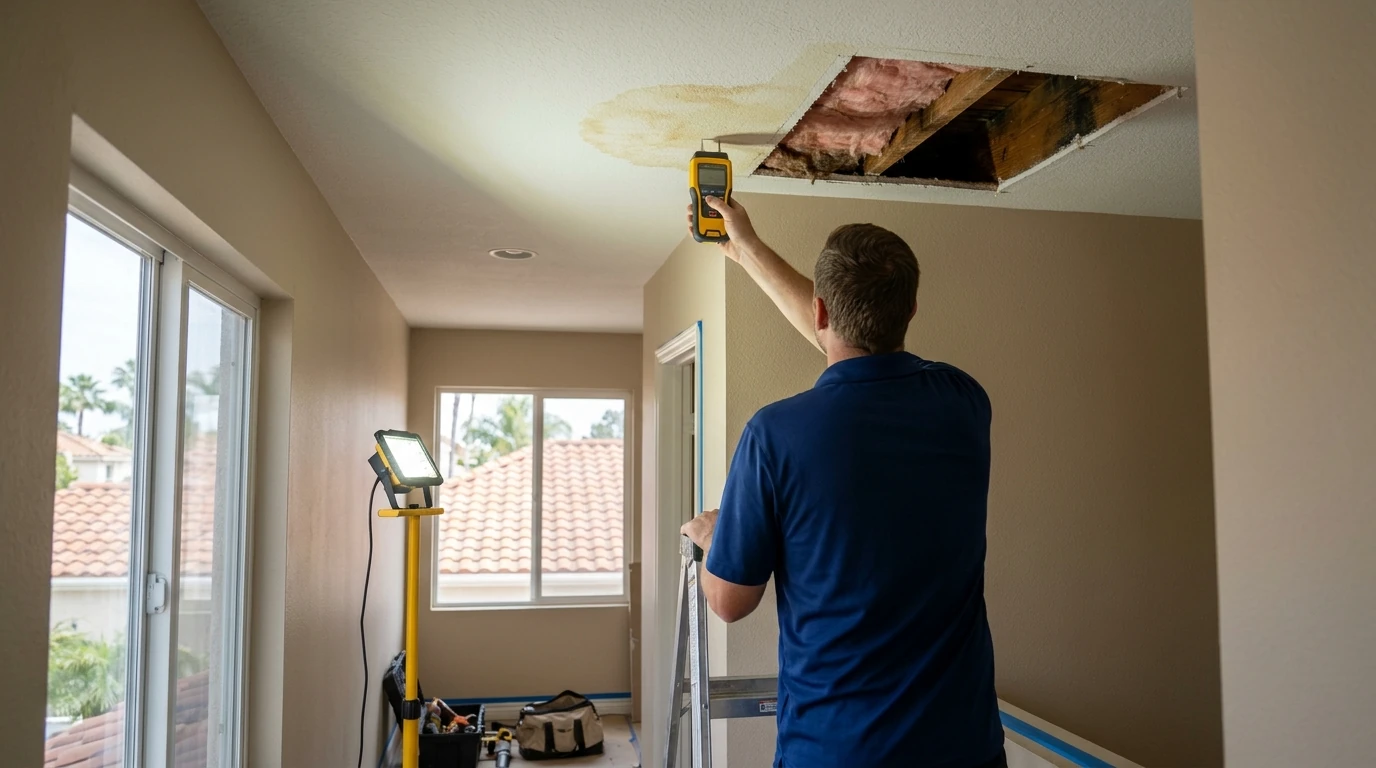
TL;DR: For a ceiling leak in Orange, CA, call HHI Restoration at (714) 209-7719 for the water damage mitigation and ceiling drying, and call a plumber or roofer only if the source itself (a pipe, fixture, or roof penetration) needs repair. A sagging or actively dripping ceiling is also a safety issue: a water-logged ceiling can collapse, so get people and furniture out from under it first.
If you’re staring at a brown ring spreading across the drywall or water dripping from a light fixture right now, you’re probably trying to figure out three things at once: is this safe, what’s causing it, and who actually fixes it. In Orange County, a ceiling leak usually traces back to one of three sources: a roof penetration, a plumbing line or fixture above the ceiling, or a clogged AC condensate line in the attic, which is especially common here because so many homes run their air handler in the attic space above a hallway or bedroom ceiling.
Who should I call first for a ceiling leak in Orange?
Call HHI Restoration at (714) 209-7719 first if water is actively coming through the ceiling or the drywall is sagging, bubbling, or already wet to the touch. The restoration company’s job is to stop the damage from spreading, extract standing water, dry the structure to prevent mold, and document everything for your insurance claim, whether the original cause turns out to be plumbing, roofing, or the AC.
If the water has already stopped and you’re only looking at a dry, old stain, you may not need an emergency call at all. A contained, dry stain still needs the source identified and repaired, but it’s not a race against mold growth, which the EPA notes can begin within 24 to 48 hours on wet materials.
Is it a roof leak, a plumbing leak, or an AC condensate leak?
The location of the stain and the weather conditions when it started usually point to the source. A stain near an exterior wall or that worsens during or right after rain is almost always roof-related: flashing around a vent pipe, chimney, or skylight has failed, or tile has slipped out of place. Orange gets most of its rain between December and March, so a roof leak discovered outside that window often means a slow, existing gap that only shows itself during a heavier storm.
A stain near a bathroom, kitchen, or laundry room above, especially one that appears or grows regardless of weather, usually points to a plumbing failure: a supply line, a drain pipe, a toilet flange, or a shower pan leak. These tend to be steadier and often smell musty before they’re visible.
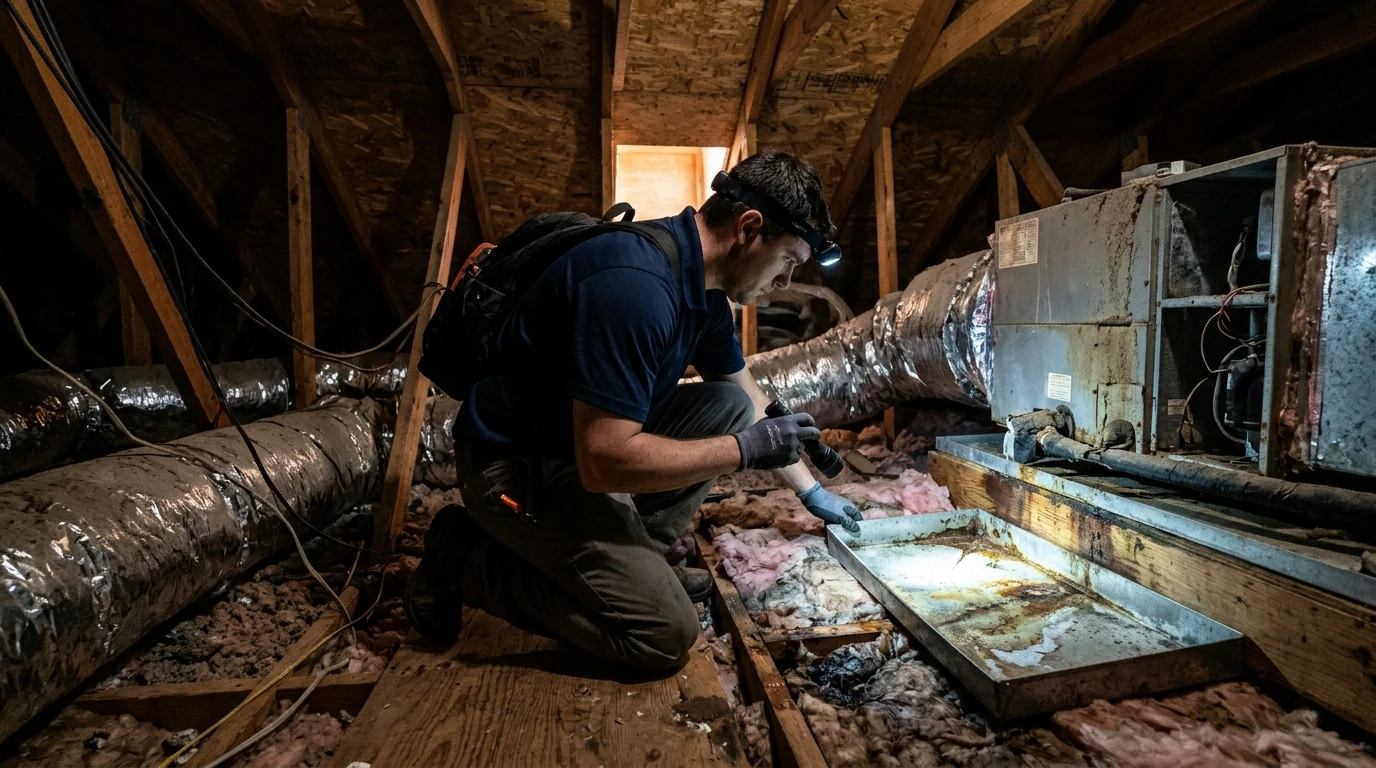
A stain centered under or near a hallway or closet ceiling, especially one that gets worse when the air conditioner has been running hard, points to a clogged AC condensate line or a cracked drain pan in the attic. This is one of the most common ceiling leak causes in Orange County homes because so many attics sit above living space and run for months at a time during the warm season.
A plumber handles supply and drain line failures. A roofer handles flashing, tile, and underlayment failures. An HVAC technician clears a clogged condensate line or replaces a drain pan. None of them typically extract standing water, dry wet insulation and drywall, or assess the ceiling for mold risk, which is where a restoration company’s scope starts.
What happens when you call a restoration company about a ceiling leak?
The first call is mostly information gathering: where the stain is, how long it’s been there, whether water is actively dripping, and whether the source has already been found. If the source is still unknown or still running, a technician can help you figure out whether it’s safe to leave the area or whether to shut off water to the house until the source is located.
On arrival, the crew uses a moisture meter and often a thermal camera to map how far the water has traveled inside the ceiling and wall cavities, since water spreads well beyond the visible stain. Wet insulation and compromised drywall usually come down in a contained area, following the ANSI/IICRC S500 water damage standard, and air movers and a dehumidifier go in to dry the remaining structure. Photos and moisture readings get documented at each stage, which is the paper trail an insurance adjuster will ask for.
What if I can’t tell where the leak is coming from?
You don’t have to diagnose it yourself before calling. A restoration crew or a roofer can trace water intrusion back to its source using moisture mapping, even when the stain’s location doesn’t obviously point to the cause above it. Water travels along joists and framing before it shows up on drywall, so a stain over the hallway can sometimes originate from a bathroom two feet away.
If you want to rule out the cheapest, fastest cause first, check the attic for a full or disconnected condensate drip pan under the air handler. That single check catches a meaningful share of ceiling leaks in homes like the ones common around Old Towne Orange and the neighborhoods near Hart Park, where many houses run central air through attic ductwork original to the home or added decades later.
Once the ceiling has been open and dried, this is also the point where it makes sense to review what your homeowners policy actually covers, since coverage for a sudden pipe failure looks different than coverage for a slow roof leak that went unnoticed for months. For the ceiling repair itself once drying is complete, see the ceiling water damage repair page for what that scope of work includes.
A ceiling leak rarely waits for a convenient time to show up. Get the water stopped and the structure dried first; the roof, plumbing, or AC repair can usually happen on a normal service schedule once the ceiling itself is no longer at risk.
About HHI Restoration
HHI Restoration is an IICRC Certified Firm based in Orange, CA, operating since 2004 under California contractor license #960721. The company’s crews hold IICRC water damage (WRT), structural drying (ASD), and mold remediation (AMRT) certifications and handle water damage restoration, mold remediation, fire and smoke restoration, storm damage, sewage cleanup, and reconstruction across Orange County, including Anaheim, Santa Ana, Irvine, and Tustin.
Need help now? Call HHI Restoration at (714) 209-7719.
Video Transcript
A brown stain spreading across your ceiling is scary, but the first call you make can save your home from bigger damage. Is it a roof leak, a plumbing failure, or a clogged AC line? The source matters, but stopping the water matters more. If water is actively dripping or the drywall is sagging, call HHI Restoration first. Standing water and mold grow fast. A stain near an exterior wall that worsens after rain usually points to a roof problem like failed flashing or shifted tile. A stain near a bathroom or kitchen that grows no matter the weather often means a plumbing leak behind the wall. A hallway or closet stain that gets worse when the AC runs hard often means a clogged condensate line in the attic. Plumbers fix pipes, roofers fix flashing, and HVAC techs clear drain lines, but none of them dry your ceiling or check for mold. Your restoration crew maps moisture with thermal cameras, removes wet materials, and dries the structure following industry drying standards. Every step gets documented with photos and readings, giving you a clear record that can help support your insurance claim. Don’t wait for a small stain to become a bigger repair. Call HHI Restoration at (714) 209-7719 to schedule an assessment.