
TL;DR: Asbestos and lead-based paint show up often in Orange County properties built before the 1980s, and disturbing them during a renovation without proper testing and abatement can expose workers and residents to serious health risks. California and federal rules require testing before many renovation and demolition projects, and any confirmed material has to be removed or encapsulated under containment by a licensed abatement contractor, following EPA lead-safe work practices and OSHA asbestos protocols, with clearance testing before the rest of the job resumes.
If you just pulled a permit to remodel a kitchen or tear out a popcorn ceiling in a home built before 1980, and your contractor mentioned you might need “abatement” before they can start, this is the step that answer. It’s not a delay tactic. Older homes in Orange, Villa Park, and surrounding North Tustin neighborhoods were built during decades when asbestos insulation and lead-based paint were standard materials, and disturbing them with a sawzall or a sander releases fibers and dust that don’t settle the way regular construction debris does.
What Counts as Asbestos or Lead Abatement, and When Is It Required?
Abatement is the licensed removal, encapsulation, or sealing off of asbestos-containing material or lead-based paint before it gets disturbed by demolition, renovation, or repair work. In practice, this applies any time a project in a pre-1981 home will disturb materials that might contain asbestos, or a pre-1978 home will disturb painted surfaces beyond a minor touch-up.
Common asbestos-containing materials in Orange County housing stock include popcorn (acoustic) ceiling texture, vinyl floor tile and the black mastic under it, HVAC duct wrap, and old stucco or siding products. Lead paint shows up on original trim, window sashes, and exterior siding in homes built before the federal ban took effect in 1978, including many of the older bungalows around Old Towne Orange. Neither material is dangerous sitting undisturbed. The risk comes from sanding, cutting, demolishing, or dry-scraping it.
How Do You Know If a Property Has Asbestos or Lead Paint?
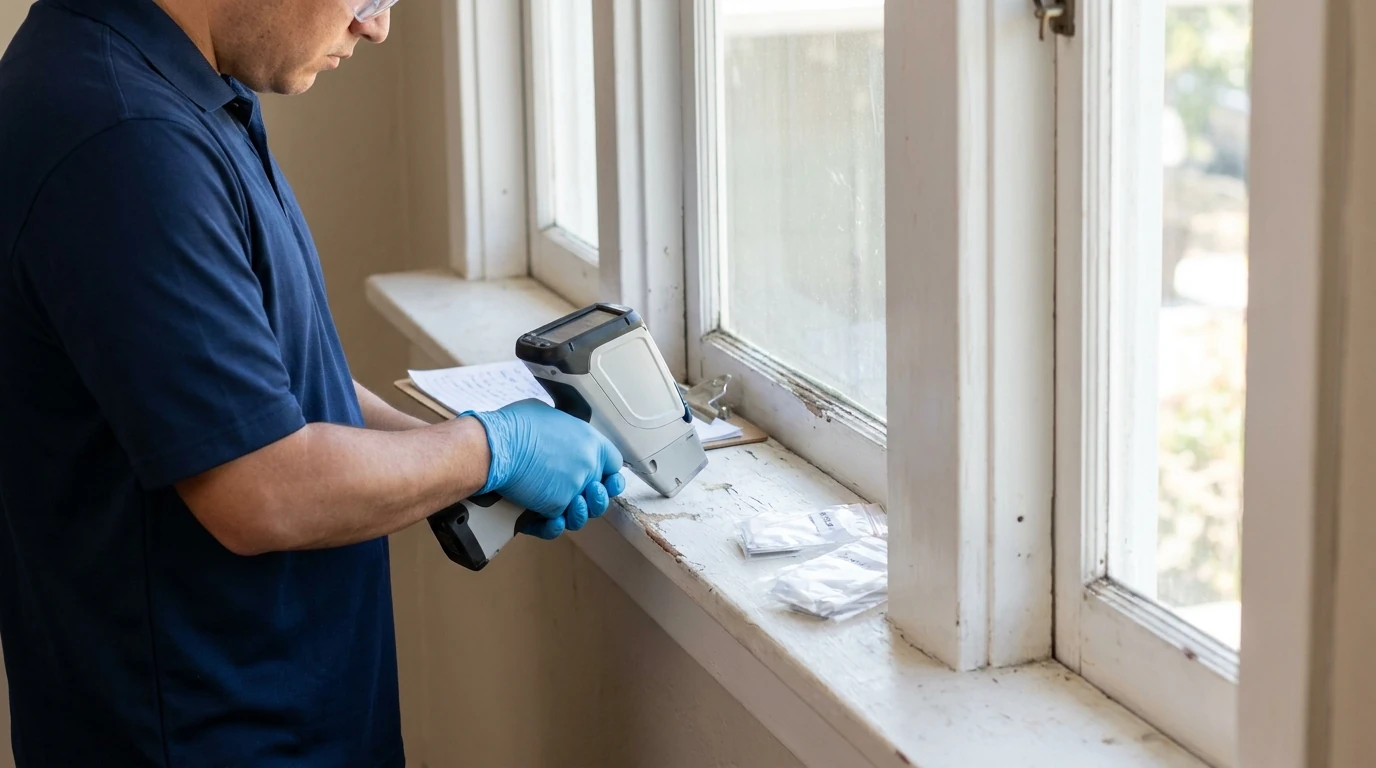
The only reliable way to know is lab testing, not the age of the home alone. A certified inspector collects bulk samples of suspect material for PLM (polarized light microscopy) analysis for asbestos, or uses an XRF analyzer or paint-chip lab testing for lead.
Year built is a useful first filter. If a property was built before 1980, assume asbestos materials are possible until testing says otherwise. If it was built before 1978, the same logic applies to painted surfaces, under the federal lead Renovation, Repair and Painting (RRP) Program rules. A visual inspection alone can’t confirm either material: popcorn texture without asbestos and popcorn texture with asbestos look identical.
What Does the Abatement Process Actually Involve?
Abatement follows a sequence designed to keep fibers and dust contained to one isolated area, not the structural engineering of the repair itself. The steps are consistent whether it’s a bathroom ceiling or a full interior strip-out:
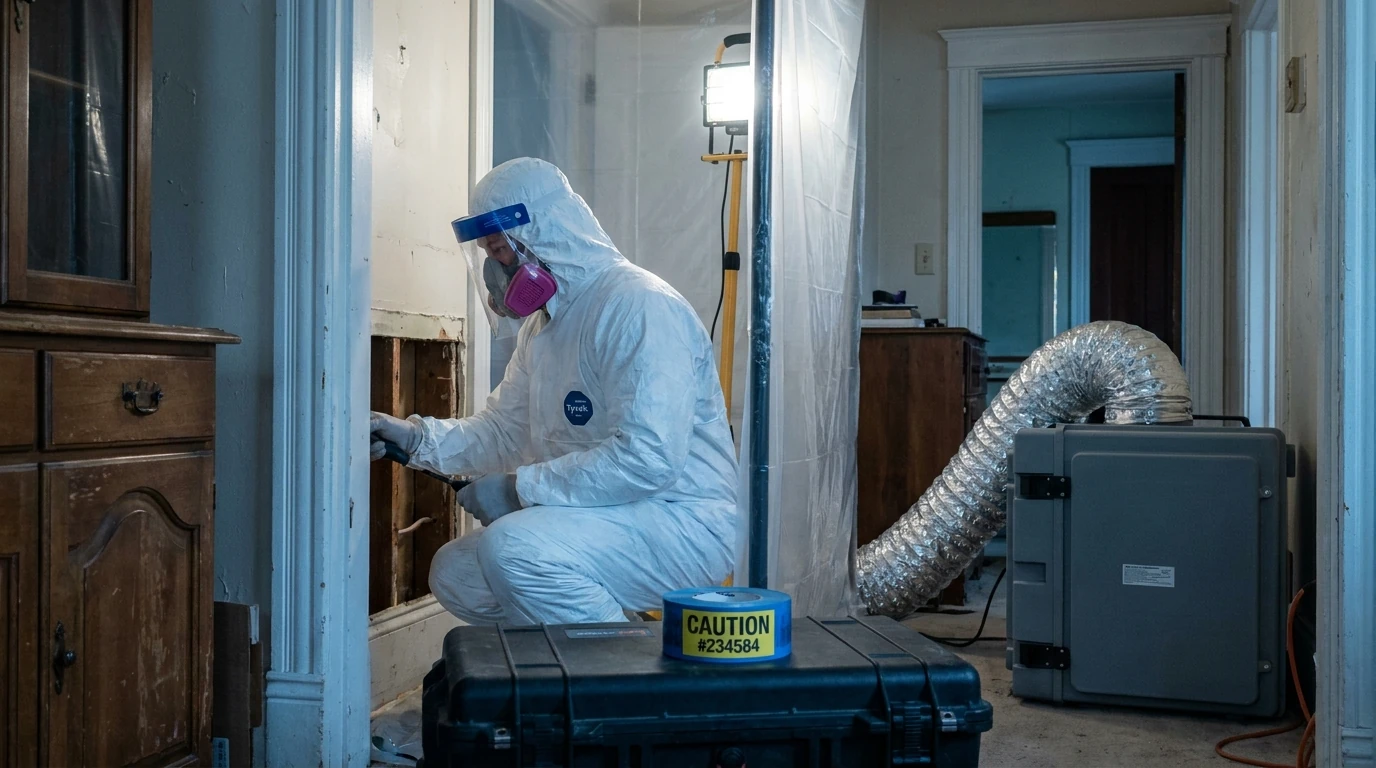
- Containment is built around the work area with sealed poly sheeting and negative air pressure, so contaminated air doesn’t migrate to the rest of the property.
- Crew PPE goes on: full Tyvek suits, P100 respirators, and sealed entry/exit procedures through a decon chamber.
- Removal or encapsulation happens using wet methods (asbestos) or HEPA-filtered sanding and containment (lead), never dry demolition.
- Bagging and disposal of the waste goes to a permitted hazardous-material facility, with manifests documenting the chain of custody.
- Clearance testing confirms air quality inside the containment area is back to a safe level before the containment comes down and other trades can re-enter.
That clearance step matters as much as the removal itself. EPA guidance on asbestos and Cal/OSHA’s referenced federal standards both treat post-abatement air testing as the final checkpoint, not an optional extra.
What Happens If You Skip Testing or Hire an Unlicensed Crew?
Skipping testing or using an unlicensed crew can trigger a stop-work order, fines, and real exposure risk for everyone on the property, including the people living there during the renovation. Orange County building departments can halt a permit if asbestos or lead disturbance is reported without documented abatement, and the cost of remediating a contaminated property after the fact runs well beyond what proper testing up front would have cost.
There’s also a liability angle that’s easy to miss. If a general contractor disturbs lead paint without following RRP work practices, or disturbs asbestos without proper containment, that exposure can follow the property through a future sale (lead disclosure requirements) or a future health claim. Confirming a contractor’s license before work starts, through the CSLB license lookup, is a five-minute check worth doing before any abatement contract is signed.
What Should You Do Before the Renovation Starts?
Order testing before you order materials or schedule other trades. A pre-renovation asbestos and lead assessment typically takes a few days for lab results, and scheduling abatement before drywall, flooring, or electrical work begins avoids the expensive scenario of re-opening finished work to remove contaminated material underneath it.
Get a written scope from the abatement contractor that specifies containment boundaries, disposal method, and clearance testing, before demolition starts. If the renovation itself is larger, coordinating testing, abatement, and the rebuild under general contracting with one team keeps the schedule from stalling between hand-offs. HHI Restoration coordinates asbestos and lead abatement with the broader rebuild for Orange County property owners, including homes in Anaheim, Santa Ana, Tustin, and Yorba Linda where similar pre-1980s housing stock is common.
If your renovation also involves structural repair or a full remodel after abatement, our guide to general contracting and reconstruction in Orange, CA walks through what that rebuild phase looks like. And if you’re still comparing contractors for the job, how to choose a restoration company in Orange covers the licensing and insurance questions worth asking before you sign anything.
Abatement doesn’t need to stall a project for weeks. With testing ordered early and a licensed crew scheduled ahead of demolition, most single-room abatement jobs add days, not months, to the renovation timeline. Call HHI Restoration at (714) 209-7719 to schedule a pre-renovation assessment for asbestos or lead paint before your project starts.
About HHI Restoration
HHI Restoration is an IICRC Certified Firm and EPA Lead-Safe Certified company serving Orange, CA since 2004 (CSLB license #960721). Their crews handle asbestos abatement, lead paint abatement, mold remediation, fire and water damage restoration, and reconstruction across Orange County, including Anaheim, Santa Ana, Irvine, and Tustin. This post was prepared with the HHI Restoration team, drawing on their experience coordinating testing, containment, and rebuild work on older area properties.