Asbestos Abatement in Orange
24/7 asbestos abatement in Orange and surrounding areas. IICRC-certified, insurance billing accepted. Call (714) 209-7719.
A popcorn ceiling that’s been painted over, a patch of crumbling pipe wrap in the crawlspace, or old vinyl floor tile you’re about to rip out during a renovation: these are the moments homeowners in Orange usually discover they might be dealing with asbestos. The material itself is often invisible to the eye once disturbed, which is exactly the problem. Dust from a single cut into asbestos-containing drywall texture or duct insulation can hang in the air for hours and settle into HVAC systems, carpet fibers, and furniture long after the work is done.
What Asbestos Abatement actually involves
Asbestos abatement is the controlled removal or encapsulation of materials confirmed or suspected to contain asbestos fibers, most commonly found in homes and commercial buildings built before the early 1980s. In Orange County that includes a lot of mid-century ranch homes with textured “popcorn” ceilings, older stucco and plaster systems, vinyl floor tile adhesive, and pipe or duct insulation in homes that still have original HVAC runs. The work requires sealed containment of the work area, negative air pressure to keep fibers from migrating into the rest of the structure, and specific decontamination steps for crew and equipment before the containment comes down. Depending on the scope, a single-room popcorn ceiling removal might run a day or two, while a whole-house pipe wrap or flooring abatement in an older property can take longer once testing, containment build, and waste disposal are factored in.
Our process
- Sampling and lab testing. Before anything is disturbed, suspect material is sampled and sent to a lab for analysis. We do not guess, and we do not remove anything presumed to contain asbestos until results confirm it.
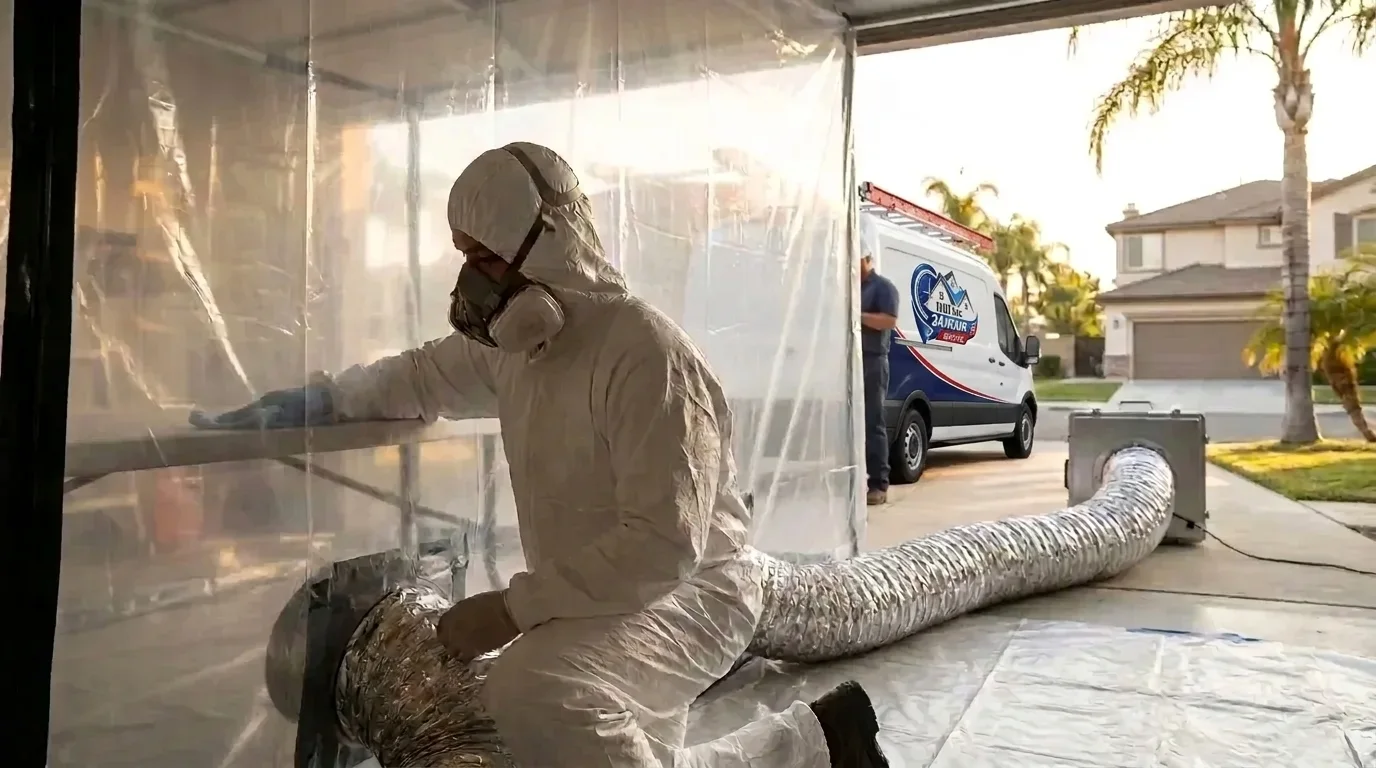
- Containment build. The work area is sealed with polyethylene sheeting, negative air machines are set up to pull air through HEPA filtration, and entry is controlled through a decontamination chamber.
- Wet removal methods. Materials are kept wet during removal to minimize fiber release, a standard practice that cuts down on airborne dust far more than dry demolition ever could.
- Bagging, labeling, and manifested disposal. Removed material goes into labeled, sealed bags and is transported and disposed of as regulated waste, with documentation kept for the property file.
- Final clearance. Once the material is out and surfaces are HEPA-vacuumed and wiped down, the space is ready for a clearance check before containment is removed and the area is returned to normal use.
What separates a good asbestos abatement response from a bad one
The biggest mistake we see isn’t during removal, it’s before it. Skipping testing and just assuming a ceiling texture is “probably fine” because the house was renovated once already is how cross-contamination happens. A rushed operator might cut corners on containment seals or skip negative air altogether, which can push fibers into adjacent rooms or the attic space through gaps around light fixtures and vents. Insurance adjusters and property managers reviewing this type of work typically want to see lab results, photographic documentation of containment, and disposal manifests, not just a verbal assurance the job is done. Reusing HVAC filters, failing to bag debris before it leaves the containment zone, or demolishing dry instead of wet are all shortcuts that create more exposure risk than they save in time.
What does Asbestos Abatement cost?
Costs vary widely based on the material involved, the square footage affected, and whether the building requires a full containment build or a smaller isolated removal. Every property and every material type is different, which is why HHI Restoration provides a written scope of work, based on lab-confirmed testing, before any abatement work begins. Homeowners insurance coverage for asbestos abatement is inconsistent and often excluded outright unless the asbestos disturbance is tied to a covered peril like storm or water damage, so it’s worth checking your policy language directly or asking us to help document the loss if it’s attached to another claim.
| Scenario | Typical range |
|---|---|
| Popcorn ceiling removal, single room | $1,500 - $3,500 |
| Whole-house popcorn ceiling removal | $4,000 - $8,500 |
| Pipe or duct insulation wrap removal | $1,000 - $4,000 |
| Vinyl floor tile and adhesive removal | $2,000 - $6,000 |
| Whole-structure abatement (renovation/demo prep) | $8,000 - $20,000+ |
Seasonal & regional considerations
Orange’s housing stock skews heavily toward homes built between the 1950s and 1970s, which means popcorn ceilings, original plumbing insulation, and older flooring materials are common renovation surprises. Summer is typically the busiest season for remodeling permits across the county, which also means testing and abatement scheduling tends to fill up faster from spring through early fall as homeowners tackle kitchen and bathroom projects before the holidays.
Service area
HHI Restoration performs asbestos testing and abatement for homeowners and property managers throughout Orange and the surrounding communities, coordinating closely with contractors on renovation timelines so testing doesn’t become the bottleneck on a remodel.
If you’re planning a renovation in a pre-1980s property or you’ve already disturbed a material you’re not sure about, stop work in that area and request an asbestos inspection before anyone picks up a tool again. Call HHI Restoration at (714) 209-7719 to schedule testing and get a written abatement scope.
Frequently Asked Questions
Does homeowners insurance cover asbestos abatement?
How do I know if my ceiling or flooring actually contains asbestos?
Is it safe to stay in the house during asbestos abatement?
What happens to the asbestos material once it's removed?
Can I remove popcorn ceiling texture myself if it has asbestos?
Watch: Asbestos Abatement in Orange
Looking for the best asbestos abatement company in Orange?
HHI Restoration provides licensed and insured asbestos abatement in Orange, CA and the surrounding area, and has served local property owners since 2004. Customers rate us 4.8 out of 5 stars across 23 Google reviews. We answer calls 24/7 — call (714) 209-7719 for immediate help.
Need Asbestos Abatement now?
We respond 24/7 across Orange and surrounding CA cities.