TL;DR: General contracting for reconstruction and renovation in Orange, CA covers the rebuild phase after fire, water, or storm damage: framing, drywall, electrical and plumbing rough-in, flooring, and finish work, done under a CSLB-licensed contractor and permitted through the City of Orange. Homeowners can hire the same company that handled the mitigation or bring in a separate general contractor, but using one licensed, insured firm for both phases usually means fewer handoffs, one continuous insurance file, and a single warranty on the finished work.
If your Old Towne Orange craftsman just dried out from a slab leak, or the fire department cleared your kitchen fire and the adjuster approved the claim, you’re probably facing the part nobody explains well: the rebuild. Mitigation, the drying, demolition, and smoke cleanup, is done. Reconstruction, the framing, drywall, flooring, and finish work that puts the house back together, is a separate phase with its own permits, its own licensing requirements, and its own line item on the insurance estimate. Here’s what that phase actually involves and how to make sure whoever does it is qualified.
What Does General Contracting Mean After Fire or Water Damage?
General contracting after a covered loss means hiring a licensed contractor to rebuild the structure once mitigation is complete, working from a permitted scope that restores the home to its pre-loss condition or better.
In California, any job where labor and materials exceed $500 requires a licensed contractor through the Contractors State License Board. Reconstruction after a fire, pipe break, or storm almost always crosses that threshold once you factor in drywall, framing repair, flooring, and paint. Before signing anything, you can check a contractor’s license status directly with the CSLB, which shows whether the license is active, what classification it covers, and whether there are any disciplinary actions on file.
The City of Orange also requires permits for most structural reconstruction work, electrical and plumbing rough-in, and any change to the home’s footprint or layout. A legitimate contractor pulls these permits as part of the job, not as an upcharge you discover later.
Should the Same Company Handle Mitigation and Reconstruction?
You are not required to use the same company for mitigation and reconstruction, but keeping one licensed contractor across both phases usually means fewer handoffs and a cleaner insurance file.
When mitigation and reconstruction are split between two companies, the second contractor often has to re-document moisture readings, demo photos, and scope notes that the first crew already captured. That duplication costs time and sometimes money, since the adjuster may question a second company’s estimate if it doesn’t match the documentation from the mitigation phase.
HHI Restoration is licensed under California contractor license 960721 and carries IICRC certifications across water, fire, mold, and structural drying, which means the same crew that dries out a property or boards up fire damage can also carry the job through framing, drywall, and finish work under one continuous file. If you’ve already read how to choose a restoration company in Orange, the same vetting questions apply here: ask who holds the license, who pulls the permits, and who’s accountable if something doesn’t pass inspection.
What Does a Full Reconstruction Scope Typically Include?
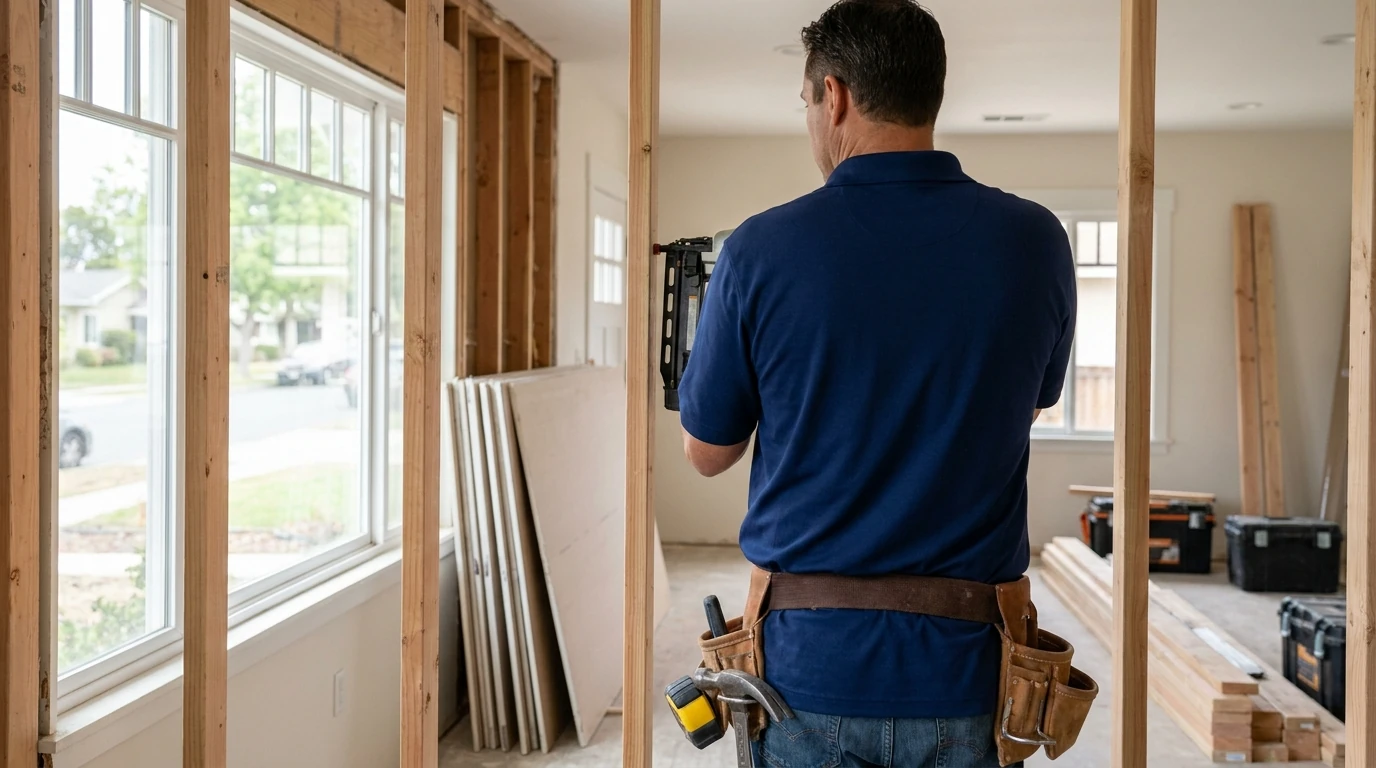
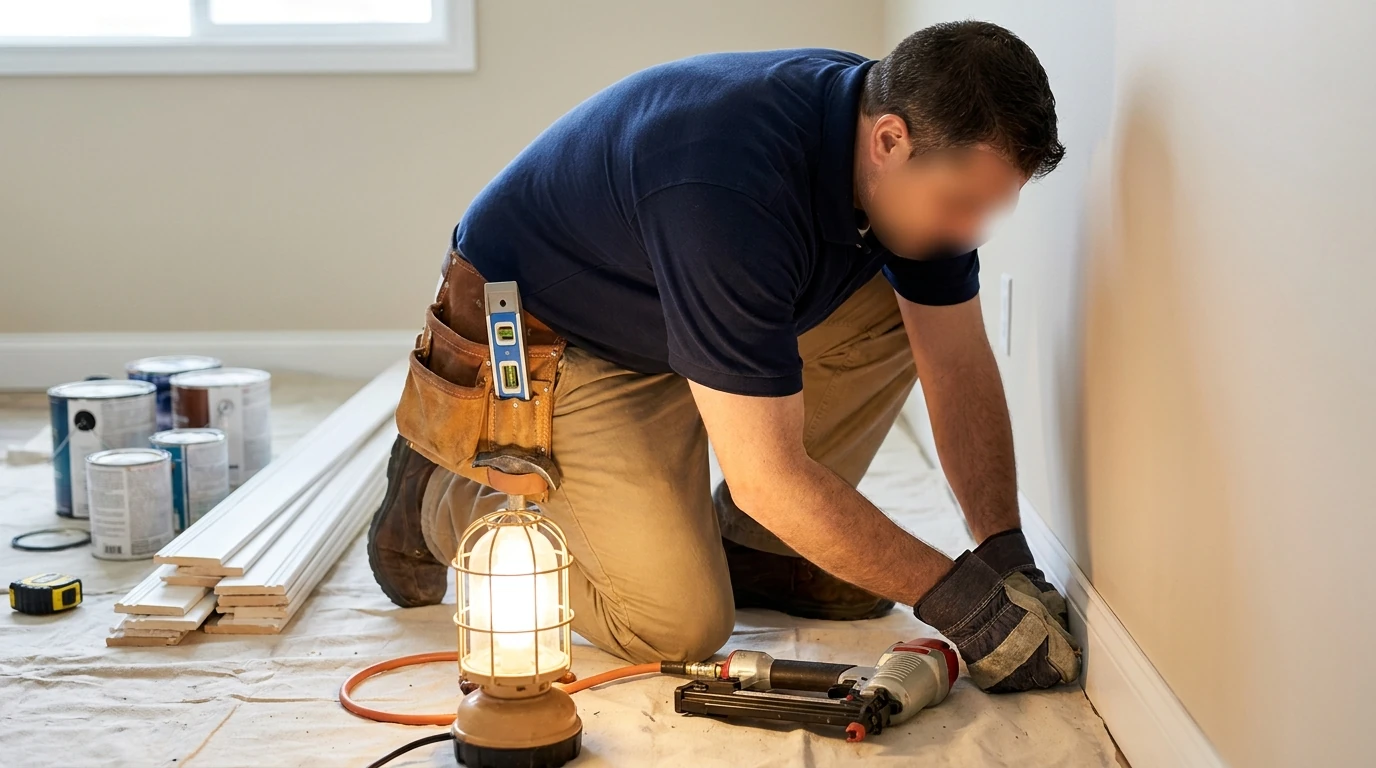
A full reconstruction scope rebuilds everything that was removed during mitigation: structural framing, insulation, drywall, electrical and plumbing rough-in, flooring, trim, and paint, matched as closely as possible to the home’s original finish.
A typical scope for a kitchen fire or a slab leak that required flooring and drywall removal includes:
- Framing repair or replacement for any charred, rotted, or water-damaged studs and joists
- Electrical and plumbing rough-in inspection and repair where lines were exposed or removed
- Drywall hang, tape, texture match, and paint to the adjacent, undamaged walls
- Flooring replacement, matched by material and, where possible, by dye lot or finish
- Trim, baseboards, and cabinetry reinstallation or replacement
- Code-required upgrades triggered by the permit, such as updated smoke detectors, GFCI outlets, or insulation R-values
That last bullet matters for older Orange housing stock, including the craftsman and Spanish-style homes common around the Orange Circle and Chapman University. A permit on a 1920s or 1950s structure can trigger code upgrades the original build never had, and those upgrades are a separate conversation with your adjuster about whether code-upgrade coverage applies to your policy.
If fire is part of your loss, our fire damage restoration process guide walks through how mitigation and reconstruction connect on a fire claim specifically.
What Should You Check Before Hiring a General Contractor in Orange?
Before signing a reconstruction contract, confirm the contractor’s license is active, get a written scope that matches the insurance estimate line by line, and avoid any payment schedule that front-loads the money before work starts.
A few specifics worth checking:
- Active CSLB license and classification. Not every license covers every trade; confirm the classification matches the work being done. The CSLB’s guide to hiring a licensed contractor outlines the questions to ask before signing.
- Proof of insurance, not just a verbal claim of coverage.
- A written scope of work that mirrors the insurance company’s estimate (often an Xactimate report), so there’s no confusion about what’s included.
- A payment schedule tied to completed milestones, not a large deposit before any work begins.
- Documentation habits. Photos at demo, during rough-in, and at final walkthrough protect you if the adjuster has questions later. Our guide on what homeowners insurance actually covers for water damage explains how that documentation ties into claim settlement.
The Insurance Information Institute’s overview of settling claims after a disaster is also a useful reference for understanding how the reconstruction estimate should line up with what your carrier approved.
What Happens After the Rebuild Scope Is Approved?
Once the scope is approved by your insurance carrier, the contractor pulls permits, schedules trades, and works room by room through framing, rough-in, drywall, and finish until the home passes final inspection.
A straightforward single-room reconstruction (a kitchen or a bathroom after a leak) typically moves faster than a whole-floor rebuild after a major fire, since permit review and trade scheduling scale with the size of the job. Either way, ask for a written timeline with inspection milestones so you know what’s happening and when.
If you’re at the point where mitigation is finished and you need a written reconstruction scope, schedule a walkthrough so the estimate can be built against what your adjuster already approved rather than starting from scratch.
HHI Restoration handles both the mitigation and the reconstruction side of a loss for Orange County homeowners, which means the same crew that dries out or boards up a property can carry it through to a finished, permitted rebuild.
About HHI Restoration
HHI Restoration is an IICRC Certified Firm serving Orange, CA and surrounding Orange County communities since 2004, operating under California contractor license 960721. The company’s technicians hold IICRC credentials in water damage (WRT), structural drying (ASD), mold remediation (AMRT), and fire and smoke restoration (FSRT), along with EPA Lead-Safe certification, and the firm carries general contracting and reconstruction among its service lines alongside water, fire, mold, storm, and sewage cleanup work.
Need help now? Call HHI Restoration at (714) 209-7719.