In Orange, CA, water damage restoration typically costs $1,500 to $15,000 or more, depending on the water source, how many rooms are affected, and whether structural materials need to be removed and rebuilt. A single-room leak from a failed washing machine hose lands at the low end. A slab leak that’s been running under a hallway for weeks, or a sewage backup, pushes the number much higher because of the category of water involved and the amount of rebuild work needed.
Orange County homes mostly sit on slab foundations rather than basements, so two causes show up again and again in local restoration calls: slab leaks (a pinhole failure in a copper supply line running under the concrete) and water heater failures (a tank that ruptures or a fitting that lets go overnight). Both can run for hours before anyone notices, which is exactly why the price range below is so wide.
What Determines the Cost of Water Damage Restoration?
The final bill comes down to three things: how contaminated the water is, how much square footage it touched, and how long it sat before drying started. A clean-water leak caught the same day costs far less than the same leak discovered a week later.
Here’s how that plays out across the scenarios Orange homeowners actually deal with:
| Scenario | Typical Cost Range |
|---|---|
| Single room, Category 1 (clean) water, minor drywall | $1,500 - $3,500 |
| Water heater failure, 2-3 rooms affected | $3,500 - $7,500 |
| Slab leak with hardwood floor replacement | $5,000 - $12,000 |
| Ceiling water damage (drywall, insulation, paint) | $1,000 - $4,000 |
| Category 3 water (sewage backup), multi-room | $7,000 - $15,000+ |
| Whole-house flood requiring reconstruction | $15,000 - $50,000+ |
These are typical industry ranges for Southern California, not a quote for any specific job. The only way to know what your job costs is a written scope after an inspection, because two jobs that look similar on the surface can diverge a lot once the drywall comes off the wall.
Why Do Similar-Looking Water Damage Jobs Cost So Differently?
The price gap between two water losses usually comes down to the category of water and how fast mitigation started, not the size of the puddle on the floor. The ANSI/IICRC S500 standard classifies water into three categories, and the category drives almost every downstream decision.
Category 1 is clean water from a supply line or water heater. It can be dried in place if crews get to it quickly. Category 2, gray water, comes from sources like a washing machine discharge or dishwasher overflow and carries more contamination. Category 3, black water, includes sewage, any backup from beyond the drain trap, and storm or flood water that enters from outside. Category 3 losses require more materials to be removed rather than dried, plus antimicrobial treatment and PPE, which raises the cost.
Response time matters just as much. Mold can begin growing on wet materials within 24 to 48 hours. A slab leak that’s been seeping for two weeks has usually already soaked into the subfloor, baseboards, and sometimes the framing, which means more demolition and a longer rebuild no matter how clean the water started out.
What Does Hardwood Floor and Ceiling Water Damage Repair Cost?
Hardwood floor water damage repair in California typically runs from a few hundred dollars for spot sanding and refinishing to several thousand dollars when the planks have cupped or delaminated and need full replacement. Engineered hardwood that’s been wet for more than a day or two usually can’t be saved; solid hardwood sometimes can be dried and refinished if caught early, but buckled boards almost always need to come up.
Ceiling water damage repair, often from a roof leak, an upstairs bathroom overflow, or an HVAC condensate line, typically costs $1,000 to $4,000. That range covers removing wet drywall and insulation, treating the framing, and repainting. It climbs if the ceiling held standing water long enough to sag, since sagging drywall usually means the insulation above it is also saturated and has to be replaced, not just dried.
Does Homeowners Insurance Cover Water Damage in California?
Most California homeowners policies cover sudden, accidental water damage, such as a burst pipe or a water heater that suddenly fails, but they exclude gradual leaks and routine wear and tear. A slab leak that’s been running slowly for weeks can get denied as a maintenance issue rather than a sudden loss, which is why documentation matters from the first phone call.
Flood damage from outside sources, rising groundwater, or storm surge is not covered by a standard homeowners policy; that requires separate flood insurance. Sewer backups and sump pump failures are also excluded unless the policy has a water backup endorsement added. The California Department of Insurance publishes a residential property claims guide that walks through what adjusters look for and how claims get evaluated.
Our post on whether homeowners insurance covers water damage breaks down the exclusions in more detail. The short version: get photos before anything is moved, keep every receipt, and get a written scope of the mitigation work, because that paperwork is what protects the claim later.
What Does the Restoration Process Actually Involve?
Water damage restoration generally happens in four phases, and understanding them helps explain where the cost comes from.
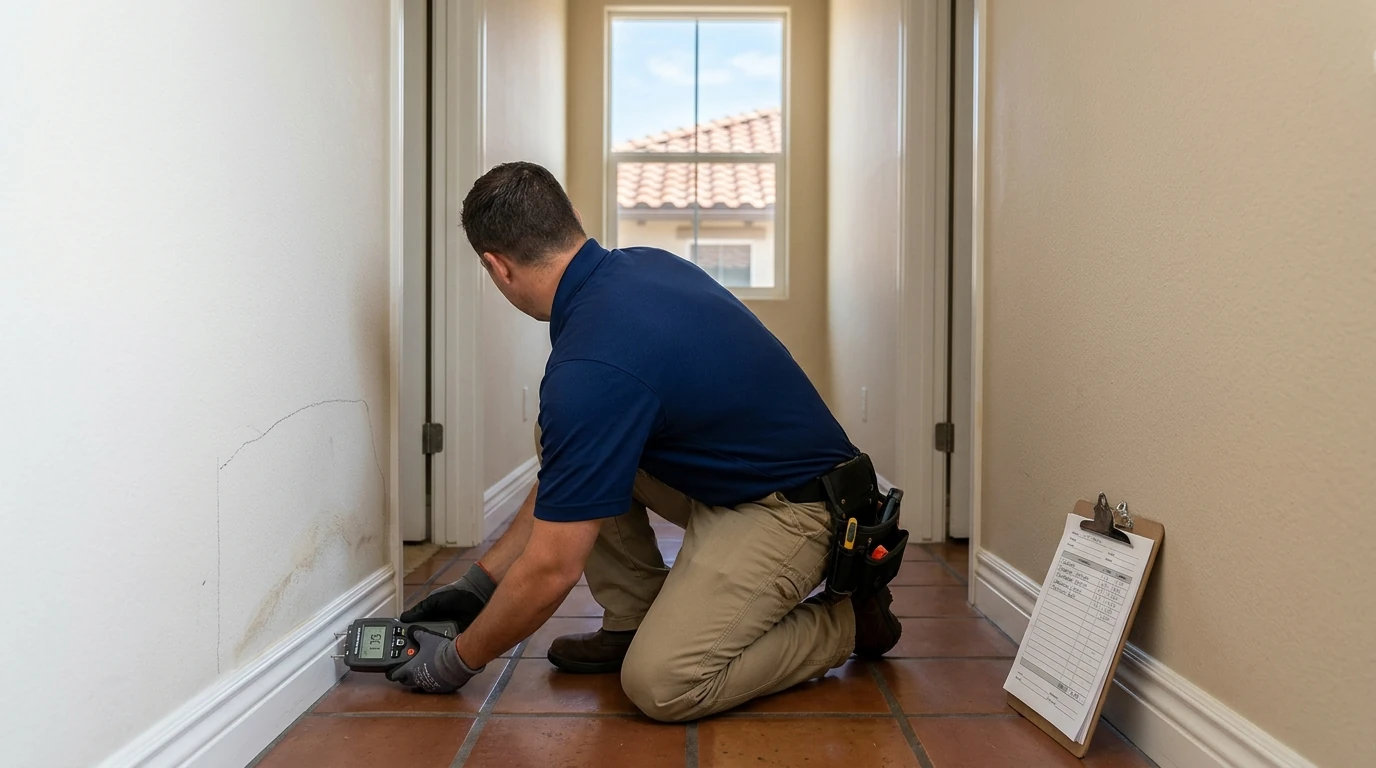
- Inspection and moisture mapping. A technician uses a moisture meter and sometimes a thermal camera to find where water traveled, which is often farther than the visible stain suggests.
- Extraction. Standing water gets pulled out with truck-mounted or portable extractors before drying equipment goes in.
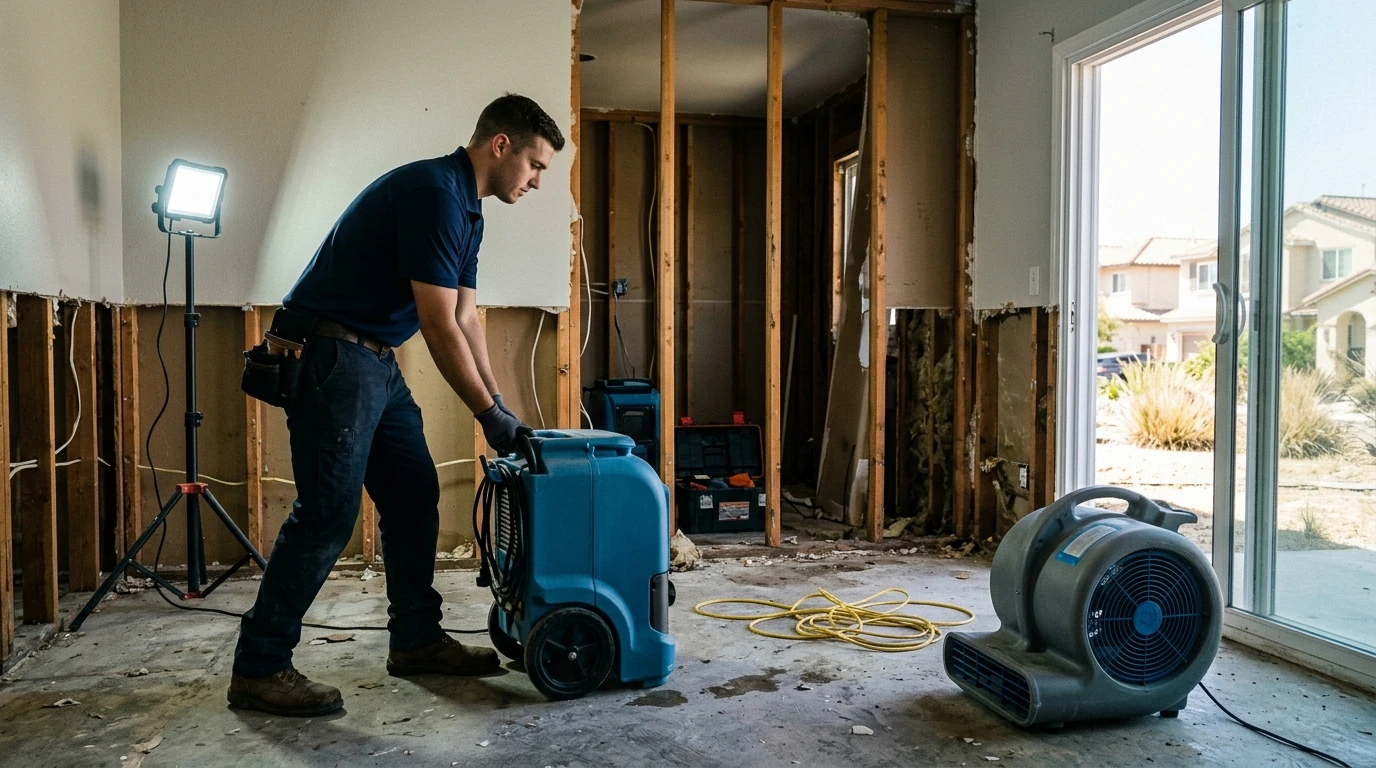
- Drying. Air movers and LGR dehumidifiers run for several days, with daily moisture readings to confirm materials are back to a dry standard before equipment comes out.
- Rebuild. Drywall, flooring, baseboards, and paint get replaced where materials couldn’t be saved. This is the reconstruction phase, and it’s usually where the bulk of the cost sits on a bigger loss.
Who Should You Call for Water Damage Restoration in Orange, CA?
For anything beyond a small, contained spill, call a restoration company before you call a flooring contractor or a handyman, because drying has to happen correctly before any rebuild starts or the repair won’t hold. HHI Restoration is an IICRC Certified Firm based in Orange that handles both the mitigation and the water damage restoration and rebuild in-house, which keeps the insurance documentation consistent from the first inspection through the final repair.
If the water is still actively flowing, shut off the source first (the main water valve or the water heater supply line) and request an emergency water removal assessment so drying can start the same day. A same-day start is the single biggest factor in keeping the final cost down.
No two water losses cost exactly the same, and anyone who quotes a firm number sight unseen is guessing. Call HHI Restoration at (714) 209-7719 to schedule a moisture assessment and get a written scope before any work begins.
About HHI Restoration
HHI Restoration is an IICRC Certified Firm serving Orange, CA since 2004 (CSLB license #960721), holding IICRC credentials in water restoration (WRT), structural drying (ASD), and fire and smoke restoration (FSRT). Their crews handle water damage restoration, mold remediation, fire and smoke restoration, sewage cleanup, storm damage, asbestos and lead abatement, and reconstruction across Orange County, from Anaheim and Santa Ana to Irvine and Fullerton.