
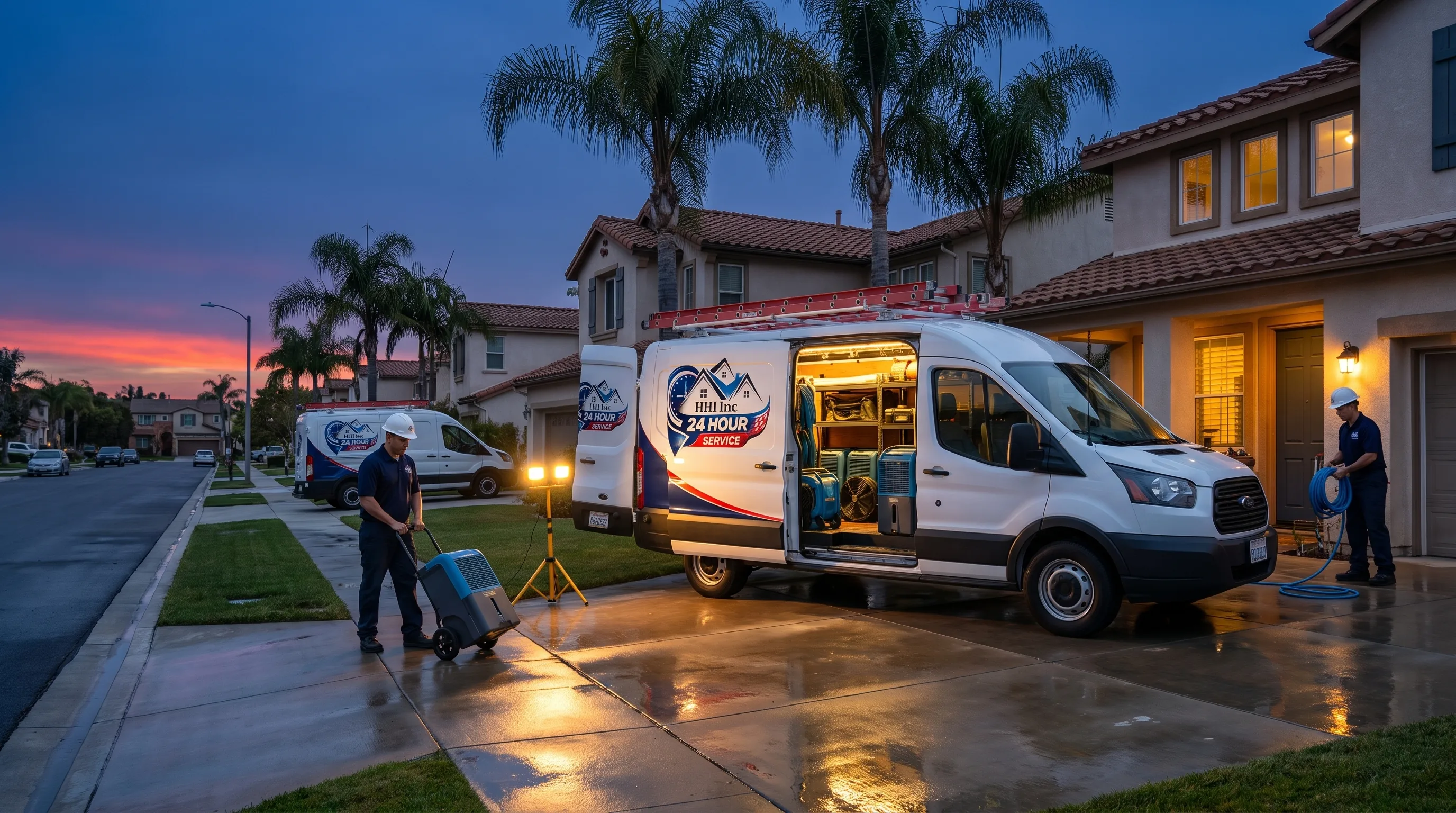
If a pipe bursts in your home, shut off the main water valve immediately, then switch off electricity to the affected area if water is near outlets or fixtures. Open a faucet on the lowest level of the house to drain the remaining pressure from the lines, then start moving furniture and valuables away from the water. Call a plumber to repair the pipe and a water damage restoration company to begin extracting water before it soaks into subfloors, drywall, and insulation. The first thirty minutes matter more than almost anything else you do during this event.
Why Pipes Burst and What You’ll Notice First
In Orange, most burst pipes trace back to one of three causes: old galvanized or polybutylene plumbing common in homes built before the 1990s, a sudden freeze during one of the county’s rare cold snaps, or a water heater or supply line that finally gives out after years of slow corrosion. You’ll usually notice it before you see it. A hissing or ticking sound inside a wall, a spike on your water bill, a damp patch spreading across the ceiling below a bathroom, or water pooling at the base of a cabinet are all early signs that something has already failed.
If the break is behind drywall, the wall may bow slightly or feel soft to the touch before any water is visible on the surface. By the time you see a stain, water has often already traveled along a stud or joist and soaked into material several feet from where the actual break is.
Step-by-Step: What to Do in the First Hour
- Shut off the main water valve. This is usually located where the water line enters the house, near the street-facing side, in the garage, or in a basement or crawlspace access. Turning off a single fixture’s shutoff won’t stop a burst supply line elsewhere in the system.
- Cut power to the area if water is near anything electrical. If you’re not confident doing this safely, leave it to the electrician or responding crew rather than risk contact with live wiring in standing water.
- Open the lowest faucet in the house. This relieves pressure still trapped in the pipes and lets excess water drain out rather than continuing to spray.
- Contain and remove standing water where you safely can. Towels, a wet-vac, or buckets can slow the spread while you wait for help, especially on hardwood or laminate floors where standing water causes the most damage, the fastest.
- Move furniture, rugs, and electronics off wet flooring. Prop up furniture legs with foil or wood blocks if you can’t move pieces entirely.
- Photograph everything before you start cleanup. Wide shots of the room, close-ups of the pipe or fixture that failed, and timestamps on your phone all help when you file an insurance claim later.
- Call a plumber for the repair and a restoration company for the water. These are two different jobs. A plumber fixes the pipe; a restoration crew handles extraction, drying, and assessing what’s absorbed into building materials.
Mistakes That Make a Burst Pipe Worse
- Waiting to see if it dries on its own. Drywall and subfloor hold moisture far longer than they appear to on the surface. What looks dry to the touch after a day can still be saturated underneath.
- Using a household fan as your only drying method. A box fan moves air across the surface but doesn’t pull moisture out of wall cavities or under flooring the way commercial air movers and dehumidifiers do.
- Patching drywall before the wall cavity is fully dry. Sealing in moisture behind new drywall is one of the most common ways a water event turns into a mold problem weeks later.
- Running the dishwasher or washing machine before confirming the supply lines are intact. If the burst originated near an appliance connection, a second failure can happen before the first one is even cleaned up.
- Ignoring a musty smell because the visible water is gone. Odor is often the first sign that moisture is still trapped somewhere you can’t see.
When to Call a Restoration Professional
A plumber’s job ends once the pipe is repaired. Whether the water that escaped before that repair needs professional attention depends on how much there was, how long it sat, and what it touched. Call a restoration company if:
- Water reached carpet, carpet pad, or hardwood flooring, all of which can wick moisture well beyond the visible wet area.
- The leak happened inside a wall, ceiling, or crawlspace where you can’t see or reach the full extent of it.
- The water sat for more than a few hours before you discovered it.
- You’re dealing with a water heater failure or a supply line break behind a major appliance, since these often release large volumes quickly and can affect the subfloor beneath the unit.
- You smell a musty or earthy odor starting within a day or two of the event.
Moisture meters and thermal imaging can confirm what’s actually wet behind a wall or under a floor, which matters because materials that read dry at the surface can still be holding enough water to support mold growth within 24 to 48 hours.
What Happens After the Water Stops
Once the active leak is resolved, the recovery process has its own sequence. Extraction comes first, pulling standing water out with pumps or wet-vacs. Then comes structural drying: industrial air movers and dehumidifiers run for several days, following IICRC S500 drying standards, with moisture readings checked regularly rather than guessed at. Anything that can’t be dried in place, like soaked carpet pad or swollen baseboards, typically needs to come out. Only after materials test dry does repair work, like replacing drywall or flooring, make sense. Skipping ahead to repairs before drying is confirmed is how a one-time pipe burst turns into a recurring mold conversation.
If you’re in the middle of a burst pipe right now, shut off the water first and worry about everything else second. Once the immediate danger is handled, HHI Restoration can walk the property, assess what the water actually reached, and start extraction and drying before it turns into a bigger repair. Call (714) 209-7719 when you’re ready for someone to take a look.