
Water Leak Detection in Orange
24/7 water leak detection in Orange and surrounding areas. IICRC-certified, insurance billing accepted. Call (714) 209-7719.
A hidden water leak rarely announces itself with a flood. More often it’s a water bill that crept up for no clear reason, a faint musty smell near a baseboard, a warm spot on a slab floor, or drywall that stays slightly damp no matter how many times it’s wiped down. By the time any of these show up, water may have been moving through a wall cavity or under a slab for weeks. Water leak detection finds the source before it becomes a structural or mold problem, without tearing out walls or flooring to guess.
What Water Leak Detection actually involves
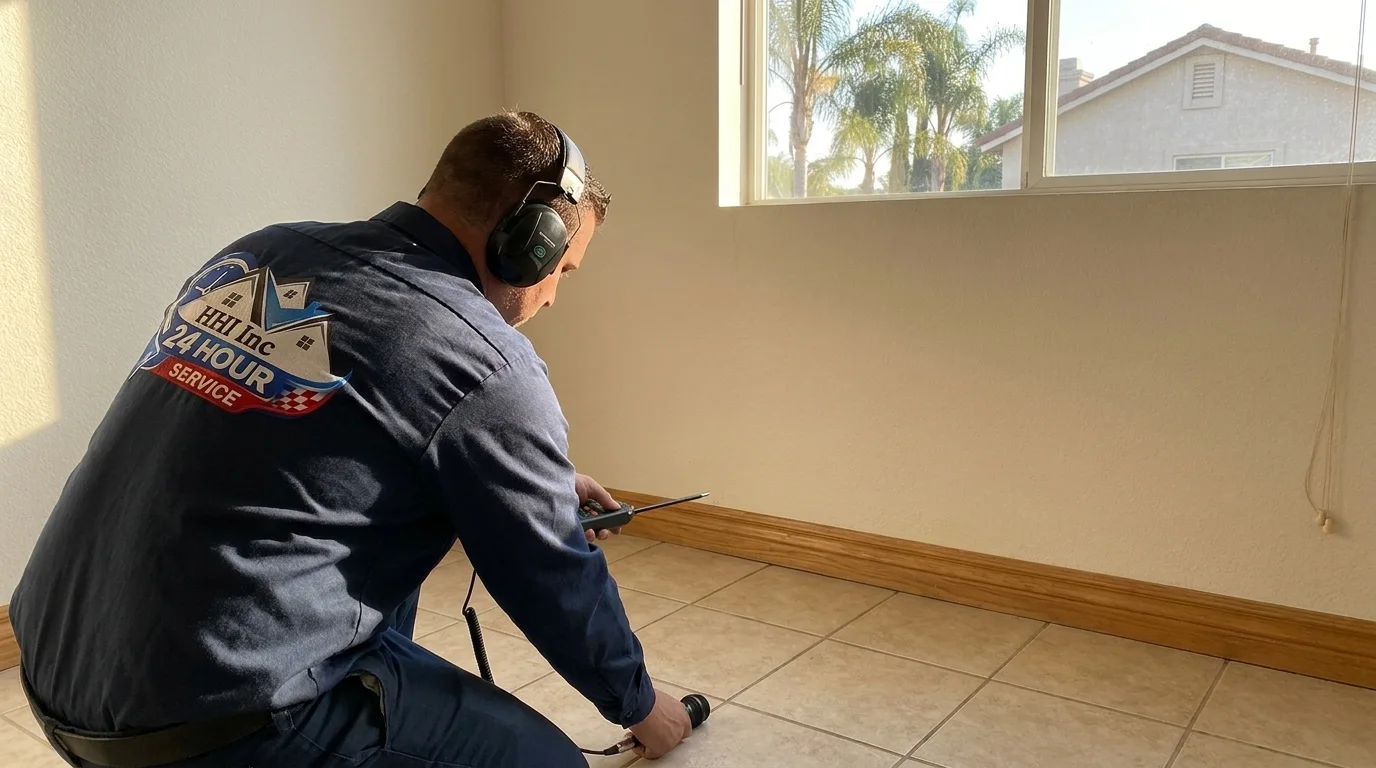
Leak detection is a diagnostic service, not a demolition project. Using thermal imaging cameras, moisture meters, acoustic listening equipment, and in some cases pressure testing on supply lines, a technician traces where water is entering a structure and where it’s traveling once it’s inside. A leak in a wall often shows up several feet from where the water actually originates, because it follows framing, insulation, and gravity before it surfaces. Slab leak detection adds another layer: pressurized water lines running under a concrete foundation can leak for a long time before a homeowner notices anything beyond a warm patch of flooring or a faint hiss under the slab. Most inspections take one to three hours depending on the size of the home and how many fixtures or lines are involved, and they end with a written finding, not a demolition bill.
Our process
- Interview and visual inspection. We start by asking what’s been noticed, when it started, and where. Water bills, stains, odors, and flooring changes all narrow the search before equipment comes out.
- Thermal and moisture scanning. Infrared cameras read surface temperature differences that often correspond to wet insulation or saturated framing behind drywall, while moisture meters confirm what the thermal image suggests.
- Acoustic and pressure testing. For suspected slab or pressurized line leaks, acoustic equipment listens for the sound water makes moving through pipe under pressure, and isolating sections of the plumbing system by pressure test narrows down which line is losing water.
- Source confirmation. Before any wall or flooring is opened, we confirm the leak’s location as precisely as the equipment allows, usually narrowing it to a specific stud bay, slab section, or fixture connection.
- Written report and next steps. You get documented findings, often with thermal images, that support either a targeted repair or an insurance claim if water damage has already occurred.
What separates a good leak detection response from a bad one
The most common mistake is treating leak detection as a reason to open walls or flooring before the source is confirmed. Cutting drywall based on a guess, rather than thermal and moisture data, means paying for repairs twice if the first cut misses. Another frequent issue is stopping the inspection once a wet spot is found, without checking whether water has traveled further than the visible symptom, which leaves hidden moisture behind to start colonizing within as little as 24 to 48 hours. Insurance adjusters reviewing a claim connected to a leak want to see documented moisture readings, thermal images, and a clear timeline, not just a verbal description of where the leak was. A detection report that stands on its own, with data and photos, moves a claim faster than one that relies on memory.
What does Water Leak Detection cost?
Costs vary with the size of the home, whether the leak is in an accessible wall versus under a slab, and whether pressure testing or multiple zones need to be checked. These are typical industry ranges, not a quote, and every inspection gets a written scope before any work begins.
| Scenario | Typical range |
|---|---|
| Single fixture or wall leak, accessible area | $200 - $450 |
| Whole-home leak survey, multiple zones | $400 - $800 |
| Slab leak detection with acoustic/pressure testing | $500 - $1,200 |
| Leak detection combined with thermal imaging report | $350 - $700 |
| Follow-up moisture verification after repair | $150 - $300 |
Homeowners insurance typically covers the resulting water damage rather than the detection service itself, though some policies include leak detection under water backup or service line endorsements, so it’s worth checking your declarations page. HHI Restoration works with all insurance carriers and documents findings in a format adjusters can use directly.
Seasonal & regional considerations
Orange’s older neighborhoods have a mix of copper and galvanized supply lines, and galvanized pipe in particular is prone to internal corrosion that leads to pinhole leaks well before any visible failure. Slab foundations are common throughout the area, which means slab leaks are a regular call, often first noticed as an unexplained rise in the water bill or a warm patch of flooring near a water heater or kitchen. Irrigation lines and outdoor hose bibs are another frequent source, especially in homes with mature landscaping where roots have shifted buried piping over the years.
Service area
HHI Restoration, licensed contractor #960721, provides water leak detection throughout Orange and surrounding Orange County communities, from older slab-foundation neighborhoods to newer construction with PEX plumbing systems.
If your water bill doesn’t add up or a spot on the wall or floor won’t dry, schedule a leak detection inspection before it turns into a drywall and flooring project. Call HHI Restoration at (714) 209-7719 to get a technician on-site with the equipment to find the source, not just the symptom.
Frequently Asked Questions
Does homeowners insurance cover water leak detection?
How do you find a leak inside a wall without cutting it open?
What is slab leak detection and how is it different from a regular leak inspection?
How long can a hidden leak run before it causes real damage?
What should I do while waiting for a leak detection appointment?
Looking for the best water leak detection company in Orange?
HHI Restoration provides licensed and insured water leak detection in Orange, CA and the surrounding area, and has served local property owners since 2004. Customers rate us 4.8 out of 5 stars across 23 Google reviews. We answer calls 24/7 — call (714) 209-7719 for immediate help.
Need Water Leak Detection now?
We respond 24/7 across Orange and surrounding CA cities.