
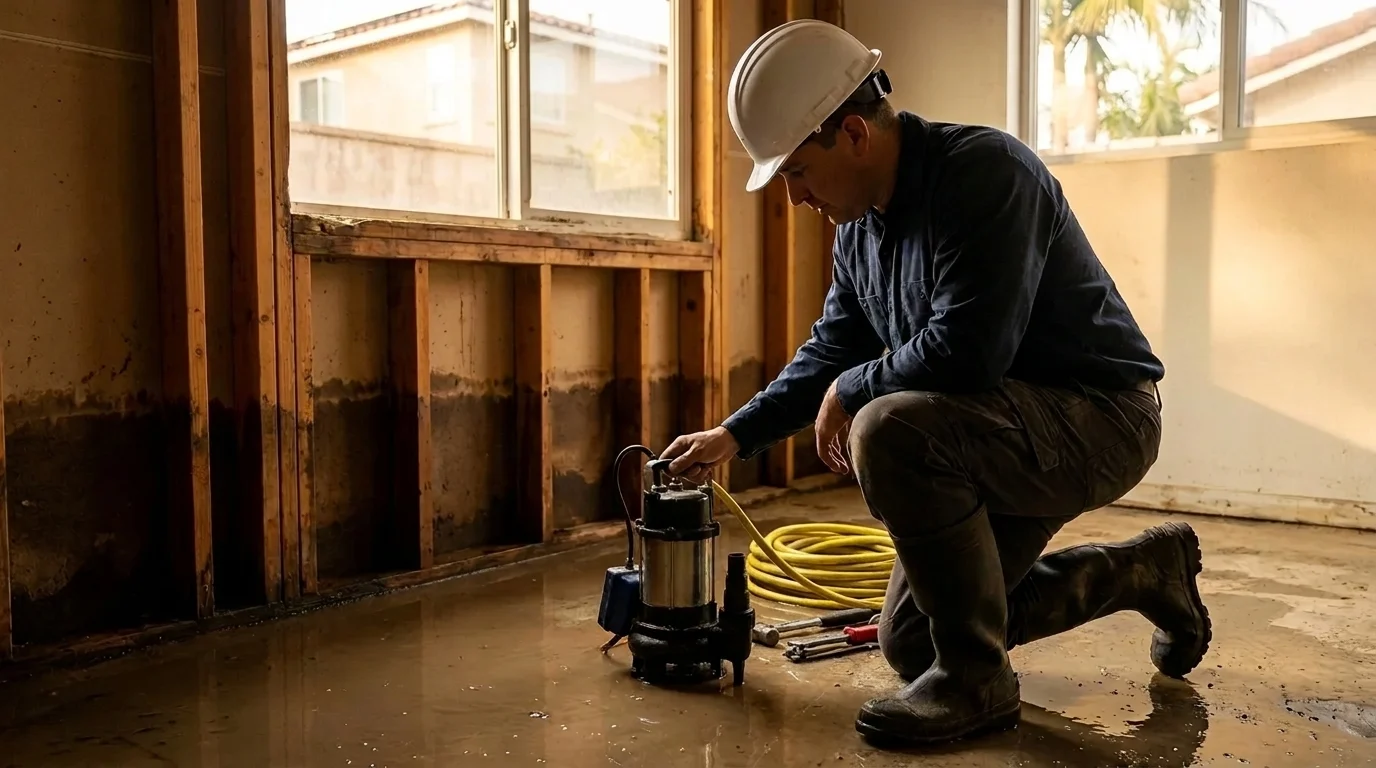
24/7 Emergency Basement Flooding Cleanup in Orange
24/7 emergency basement flooding cleanup in Orange and surrounding areas. IICRC-certified, insurance billing accepted. Call (714) 209-7719.
Basement flooding emergency in Orange? We answer 24/7. Water finding its way into a basement rarely announces itself with a dramatic flood. More often it’s a damp smell near the water heater, a dark tide line creeping up the drywall, or a sump pump that cycles all night and still can’t keep pace with a storm. By the time carpet squishes underfoot or boxes on the floor feel soft at the bottom, water has usually been sitting against the foundation for hours, and it doesn’t take long for that moisture to migrate into framing, insulation, and subflooring above.
What Basement Flooding Cleanup actually involves
Basement flooding behaves differently than flooding on upper floors because the water is working against gravity, hydrostatic pressure, and often a concrete slab that holds moisture long after the surface looks dry. Depending on the source (storm surface water, groundwater intrusion through a cracked wall, a failed sump pump, or a supply line break) the cleanup starts with extraction using truck-mounted or portable pumps, followed by targeted drying of concrete, framing, and any finished materials like drywall, carpet pad, or paneling. Basements also tend to hold more porous storage items, so content triage happens early: what can be dried, what needs to move out, and what’s a total loss. A basement with finished walls and flooring takes meaningfully longer to dry than a bare slab because moisture hides behind the surface, which is why moisture mapping matters more here than almost anywhere else in the house.
Our process
- Source confirmation and water categorization. Before extraction starts, we identify where the water is coming from and whether it’s clean groundwater, gray water, or carries contamination, since that determines PPE and disposal decisions.
- Extraction and bulk water removal. Pumps and extraction units pull standing water fast, prioritizing areas where water is still entering so drying efforts aren’t undone by continued intrusion.
- Material assessment. Drywall, baseboards, carpet, pad, and stored belongings are checked against moisture readings to decide what dries in place and what needs to come out, since basement materials often wick moisture upward well past the visible waterline.
- Structural drying with monitoring. Air movers and dehumidifiers are set based on room size and material type, with daily moisture checks on concrete, framing, and any remaining finished surfaces until readings return to a dry standard.
- Final verification and reassembly notes. Once drying goals are met, we document the readings and condition of the space so you and your adjuster have a clear record of what was affected and what was restored.
What separates a good basement flooding response from a bad one
The most common mistake in basement cleanup is stopping drying too early because the surface looks and feels dry while the concrete slab or wall cavity underneath still holds moisture. Concrete releases water slowly, and if drying equipment comes out before the slab reaches equilibrium, trapped moisture becomes a mold problem within days. Another frequent miss is ignoring the source: extracting water without addressing why it got in (a foundation crack, failing sump pump, or grading issue) means the next rain repeats the whole cycle. Adjusters reviewing basement claims generally want to see moisture logs over time, not just a single reading, along with documentation of what materials were removed and why. A thorough response also checks for water that traveled behind finished walls or under flooring that looks untouched from the room side.
What does Basement Flooding Cleanup cost?
Costs vary widely depending on how much standing water was present, how long it sat, whether the basement is finished or unfinished, and whether materials like drywall or carpet need to be removed. These figures reflect typical industry ranges, not a quote, since every basement and every loss is different. HHI Restoration provides a written scope of work before any cleanup begins so you know what’s being done and why. Homeowners insurance often covers sudden and accidental water damage, such as a burst pipe or sump pump failure, but typically excludes gradual seepage or groundwater flooding unless a flood policy is in place.
| Scenario | Typical range |
|---|---|
| Unfinished basement, shallow standing water | $1,000 - $2,800 |
| Finished basement, carpet and drywall affected | $3,000 - $7,500 |
| Extensive flooding with contents loss | $6,000 - $15,000+ |
| Sump pump failure, localized damage | $1,500 - $4,000 |
| Groundwater seepage with structural drying | $2,500 - $6,000 |
Seasonal & regional considerations
Orange doesn’t see freeze-thaw cycles the way colder regions do, but seasonal rain events can overwhelm aging sump systems and expose foundation cracks that stay dry the rest of the year. Older homes in and around the area with basements or below-grade additions are more likely to show seepage during heavier winter storms, especially where grading slopes toward the foundation instead of away from it. A basement that’s never flooded before can still take on water during an unusually wet season, which is why checking sump pump function and foundation seals ahead of storm season matters.
Service area
HHI Restoration responds to basement flooding throughout Orange and the surrounding communities, working with the mix of housing stock common to the area, from older homes with partial basements to newer construction with finished lower levels.
If water is actively coming into your basement right now, call (714) 209-7719 to get extraction started before it spreads further into framing and stored belongings.
Frequently Asked Questions
Does homeowners insurance cover basement flooding cleanup?
How do you know if water has gotten into the concrete slab or walls, not just the surface?
Should I remove wet carpet and drywall myself before you arrive?
Why does my basement smell musty even after the water is gone?
How long does it take to dry out a flooded basement?
Looking for the best basement flooding cleanup company in Orange?
HHI Restoration provides licensed and insured basement flooding cleanup in Orange, CA and the surrounding area, and has served local property owners since 2004. Customers rate us 4.8 out of 5 stars across 23 Google reviews. We answer calls 24/7 — call (714) 209-7719 for immediate help.
Need Basement Flooding Cleanup now?
We respond 24/7 across Orange and surrounding CA cities.