TL;DR: Storm and wind damage restoration in Orange, CA covers tarping and securing a property after Santa Ana wind events, extracting any water that got in through a compromised roof or window, drying structural materials, and rebuilding damaged areas. Most homeowners policies cover sudden wind damage (a tree limb through a roof, shingles torn off), but the claim depends on fast documentation and a professional scope of repairs before work begins.
If a Santa Ana wind event just peeled shingles off your roof, knocked a branch through a window, or pushed rain through a gap that wasn’t there yesterday, you’re not dealing with a cosmetic problem anymore. Wind damage becomes water damage fast once the building envelope is breached, and every hour that opening stays uncovered, the interior damage gets worse. Here’s what actually needs to happen, in what order, and what your insurance is likely to pay for.
What counts as storm and wind damage in Orange, CA?
Storm and wind damage includes any structural harm caused by high wind, wind-driven rain, or wind-blown debris, from torn roofing and broken windows to downed fencing and damaged siding. In Orange, the most common trigger isn’t a hurricane or tornado, it’s the Santa Ana wind events that blow through the Santiago Creek corridor and foothill-adjacent neighborhoods each fall and winter, sometimes gusting past 60 mph.
Older homes near Old Towne Orange with original clay tile or aging composition shingle roofs are especially vulnerable, since wind uplift finds the weakest fastening points first. Newer stucco construction near Chapman University tends to hold up better structurally but can still lose roof vents, gutters, and fascia board in a strong gust. Once wind compromises the roofline or a window seal, rainwater intrusion usually follows within the same storm cycle, which is why restoration crews treat wind damage and water damage as one job, not two separate problems.
What should you do in the first few hours after wind damage?
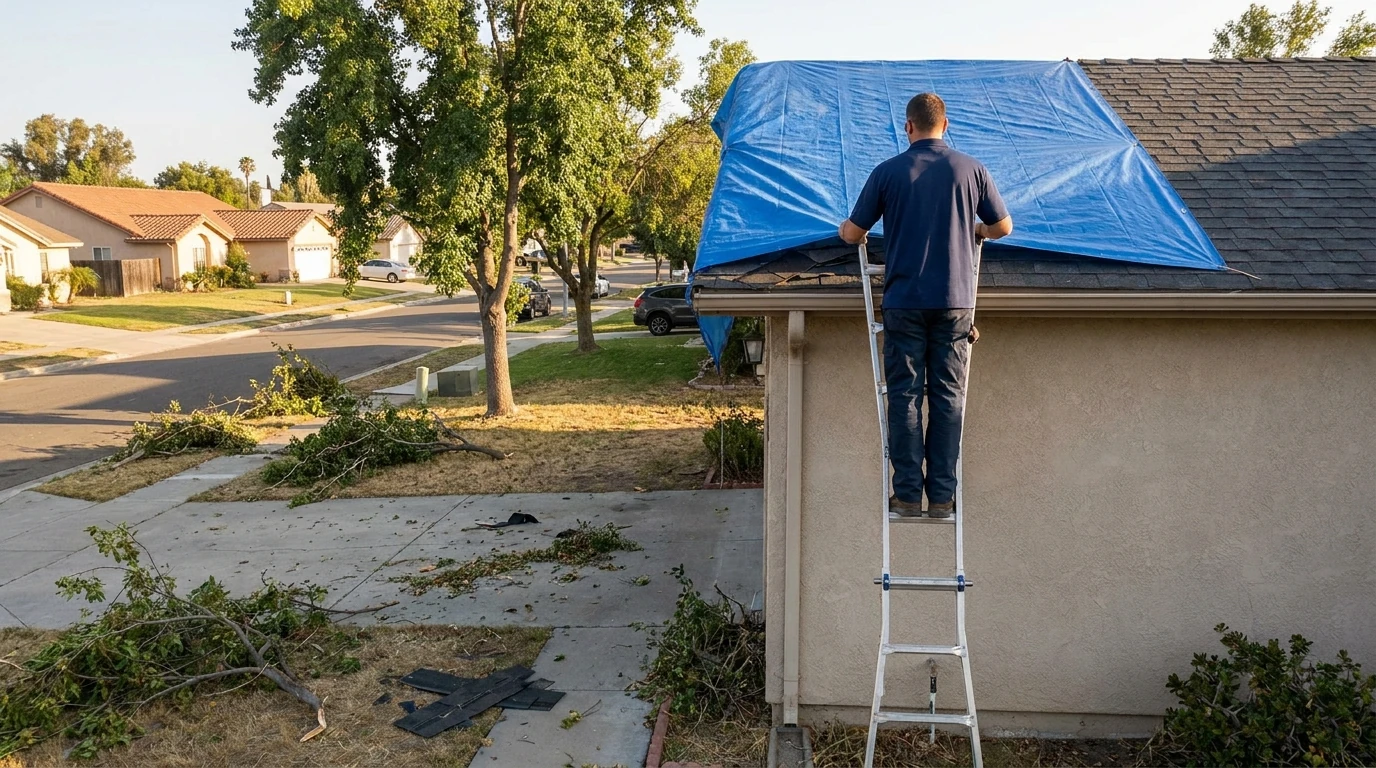
The first priority is stopping further water and weather intrusion, which usually means emergency tarping or board-up, not full repairs. Walk the exterior (only if it’s safe, after winds have died down) and photograph every visible area of damage: missing shingles, cracked windows, siding gouges, and any debris that caused the damage.
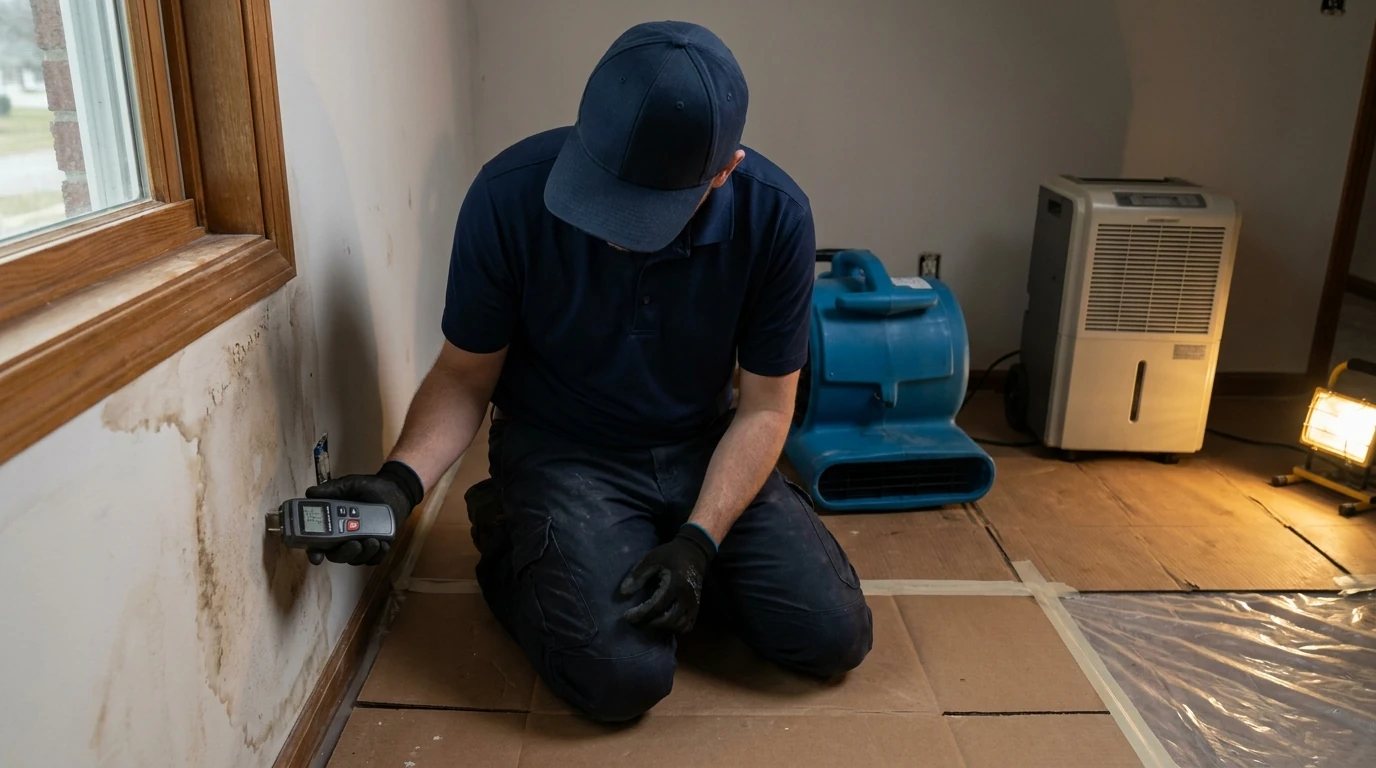
Do not attempt roof-level tarping yourself on a sloped or wet roof. A fall risk isn’t worth saving a service call. If water is already entering the structure, move furniture and belongings away from the affected area and run a wet/dry vac on standing water if you have one, but leave structural drying to a crew with commercial air movers and dehumidifiers, since trapped moisture inside wall cavities and insulation won’t dry on its own and can seed mold within 24 to 48 hours.
If you’ve dealt with interior water intrusion before, our guide on what to do in the first 24 hours after water damage covers the drying timeline in more depth.
Will homeowners insurance cover storm and wind damage?
Most standard California homeowners policies cover sudden, wind-driven damage like a tree limb through a roof or shingles torn off in a gust, but they typically exclude damage from long-term wear, like a roof that was already failing before the storm. The Insurance Information Institute notes that wind damage is commonly covered under standard policies, though flood damage from rising water is a separate policy entirely through the National Flood Insurance Program.
The claim outcome usually comes down to documentation. Adjusters want date-stamped photos of the damage, a written scope of repairs from a licensed contractor, and a clear sequence showing emergency mitigation happened before full repairs started. A restoration company that documents moisture readings, photographs, and a line-item scope before beginning work gives the claim a much stronger paper trail than a handyman repair with no records.
What does professional storm damage restoration actually involve?
Professional storm damage restoration moves through four phases: emergency stabilization, moisture mitigation, structural drying, and rebuild. Stabilization happens first and fastest, usually tarping a roof or boarding a broken window within hours of the call to stop further intrusion.
- Emergency board-up and tarping to seal the envelope against further wind and rain.
- Water extraction from any interior areas where wind-driven rain or roof breach let moisture in.
- Structural drying with air movers and dehumidifiers, tracked with moisture meter readings until materials return to a dry standard, consistent with the ANSI/IICRC S500 water damage standard.
- Reconstruction, covering everything from roof decking and shingles to drywall, insulation, and trim, matched to the original materials where possible.
Skipping straight to reconstruction without proper drying is the most common and costly mistake. Trapped moisture behind new drywall or under new roofing leads to rot and mold that shows up months later, usually after the insurance claim has already closed.
Who should you call for storm damage restoration in Orange?
Call a licensed restoration contractor who handles both the emergency stabilization and the structural drying, not just a roofer who can patch shingles. HHI Restoration is a licensed and insured restoration firm (California contractor license #960721, verifiable through the CSLB license lookup tool) that handles emergency board-up and tarping, water extraction, structural drying, and the rebuild under one scope, which keeps the insurance documentation consistent from the first tarp to the final repair.
Get the roof or window covered first, get a written scope of work before any demolition starts, and keep every photo and moisture reading on file for the adjuster. That sequence protects both the property and the claim.
About HHI Restoration
HHI Restoration is an IICRC-certified firm serving Orange, CA and nearby cities including Anaheim, Santa Ana, Irvine, Garden Grove, and Fullerton since 2004. The company holds IICRC certifications in water restoration (WRT), structural drying (ASD), fire and smoke (FSRT), and mold remediation (AMRT), and is licensed and insured under California contractor license #960721. HHI Restoration handles storm and wind damage restoration, emergency board-up and tarping, water cleanup, fire and smoke restoration, mold remediation, and reconstruction across Orange County.
Need help now? Call HHI Restoration at (714) 209-7719.