TL;DR: Sewage cleanup means removing contaminated black water, disinfecting every surface it touched to the IICRC S500 standard, and confirming the space is safe before repairs begin. Most residential jobs take two to five days depending on how far the water traveled and whether drywall, baseboards, or flooring have to come out. Homeowners insurance typically covers a sudden backup caused by a mechanical failure, but not a backup traced to years of neglected maintenance.
If a toilet just overflowed into the hallway, or a floor drain in the laundry room is pushing water back up instead of taking it away, you’re dealing with raw sewage, not a clean leak. That distinction changes everything about how the cleanup has to happen. Older homes near Old Towne Orange and other pre-1960s neighborhoods often run on clay sewer laterals, and tree roots from mature parkway trees work their way into the pipe joints over decades. A root-clogged clay line is one of the most common reasons an Orange County home sees a backup with no warning.
What makes sewage cleanup different from a regular water damage job?
Sewage cleanup is a Category 3 water loss, also called black water, under the ANSI/IICRC S500 Standard for Professional Water Damage Restoration. Category 3 water carries bacteria, viruses, and other pathogens, so anything porous it touches, carpet, carpet pad, drywall, insulation, upholstered furniture, is treated as contaminated and usually has to be removed rather than just dried.
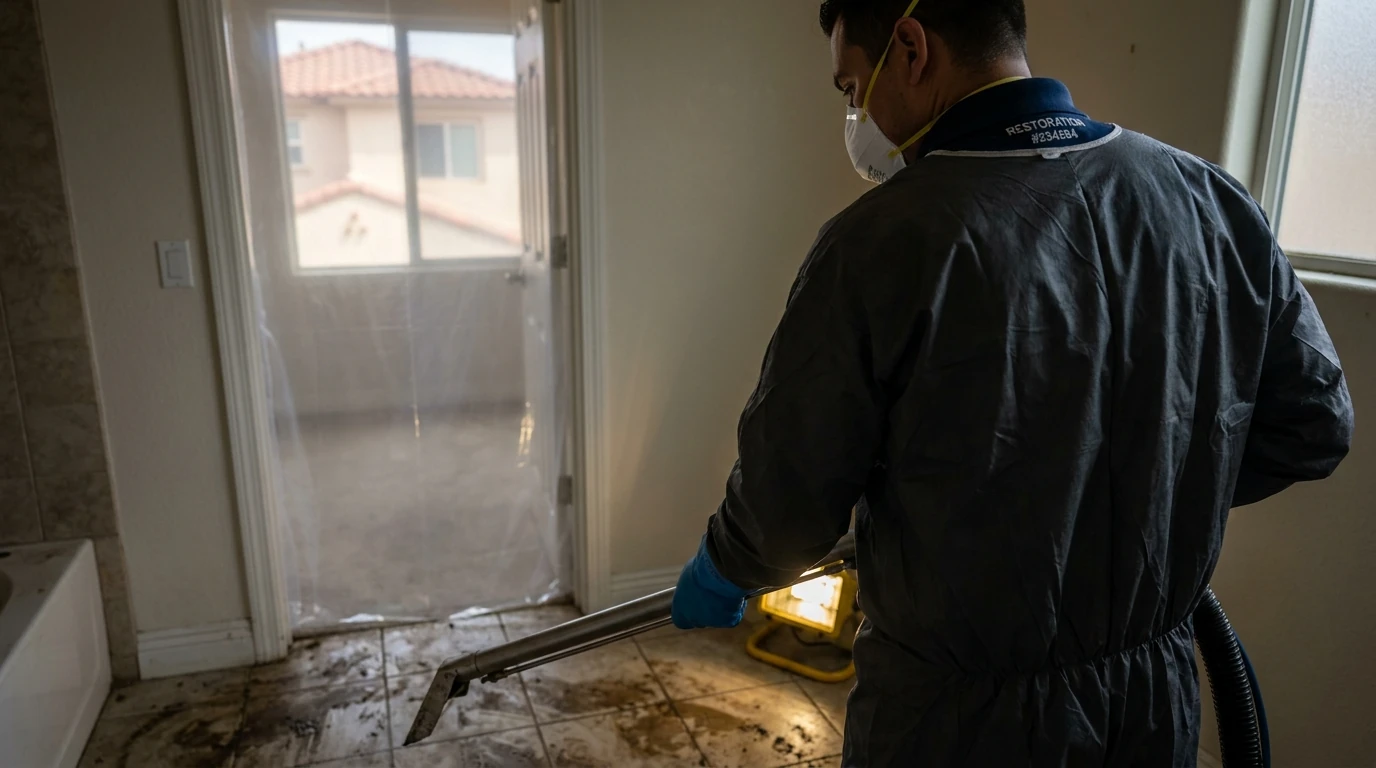
That’s the core difference from a clean-water leak. A burst supply line can often be dried in place. A sewage backup forces harder decisions about what gets cut out versus what gets disinfected and kept, because the goal isn’t just dry, it’s sanitary. Crews follow CDC guidance for cleaning safely after a disaster for PPE and surface disinfection, and anyone without a respirator, gloves, and waterproof coverage has no business being in that room.
What does the sewage cleanup process actually involve?
A typical job runs through six steps, in this order: contain, extract, remove, disinfect, dry, and verify. Skipping ahead in that sequence is how odor and mold problems show up weeks later.
- Shut off the source and contain the area with poly sheeting to stop contamination from spreading to unaffected rooms.
- Extract standing water and solids with truck-mounted or portable extraction equipment rated for black water.
- Remove contaminated porous materials: soaked carpet and pad, baseboards, and drywall up to the water line, following S500 guidance on what can’t be safely saved.
- Disinfect every affected surface with an EPA-registered antimicrobial, including studs, subfloor, and anything that will be enclosed again.
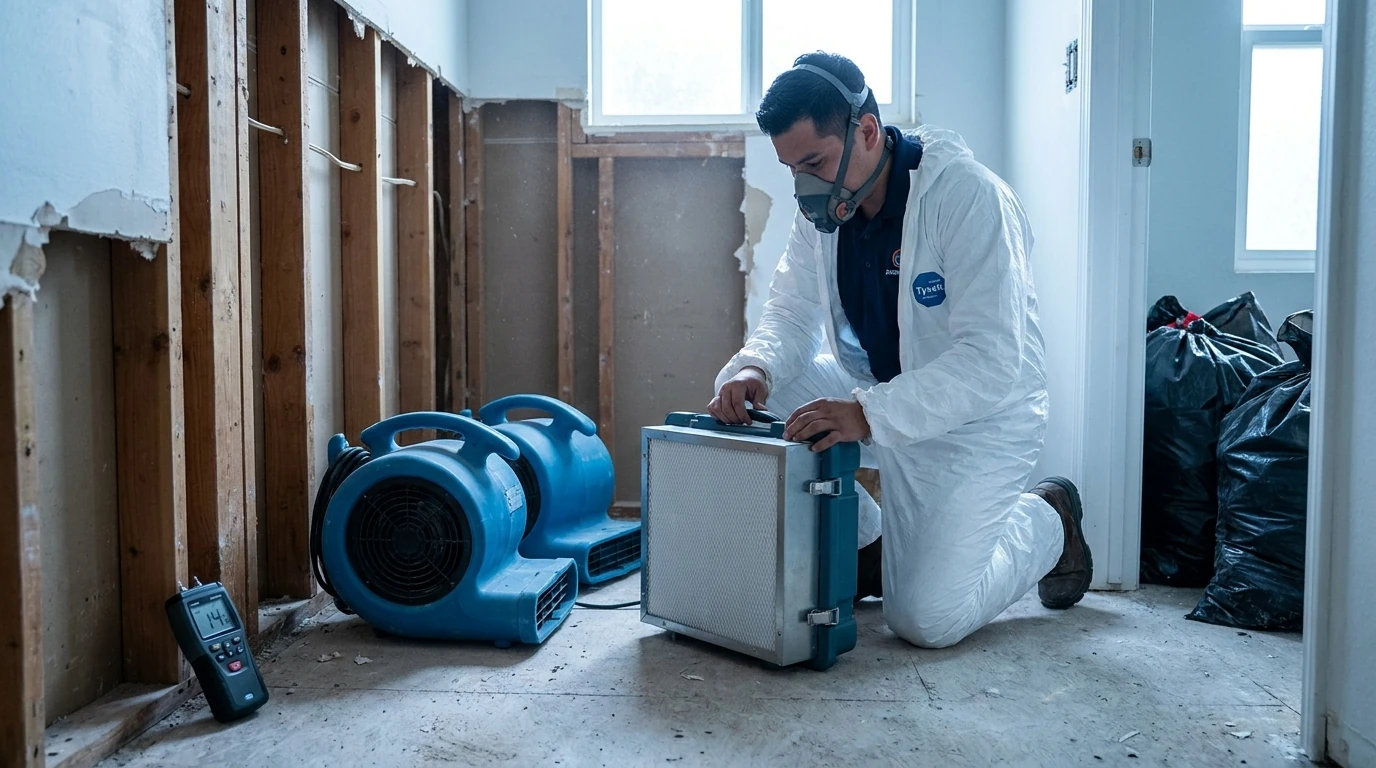
- Dry the structure with air movers and dehumidifiers until moisture readings in the studs and subfloor return to a dry standard, not just surface-dry.
- Verify with a final inspection, sometimes including an ATP or surface swab test, before any rebuild work starts.
For a single bathroom, this whole sequence often finishes in two to three days. A backup that spread into a hallway, bedroom, or finished basement can take closer to a week once the removal and rebuild scope grows.
Will homeowners insurance pay for sewage cleanup?
Most standard homeowners policies cover sewage backup only if you’ve added a sewer and drain backup endorsement, which is a separate rider from the base policy in most states. Without that endorsement, a backup caused by a municipal sewer main failing or a neighbor’s line backing into yours is often excluded entirely.
When the endorsement is in place, coverage generally applies to sudden, accidental backups, a pipe collapse, a mechanical sump failure, a sudden clog, but not to damage from a sewer lateral the homeowner knew was failing and never repaired. The Insurance Information Institute’s overview of standard homeowners coverage is a useful starting point for understanding where the line usually falls, though every policy reads differently. Document the damage with photos before any removal starts and keep every disposal and equipment invoice; adjusters ask for both. If you’ve already been through a water claim before, the walkthrough in What To Do in the First 24 Hours After Water Damage covers documentation habits that carry over directly to a sewage claim.
Who should you call first for a sewage backup in Orange?
Call a restoration company before you call a plumber if there’s already water on the floor, because the standing contamination needs to come out fast regardless of what caused the clog. If the line is still actively backing up, shut off the water supply to the fixture and stop using any drains in the house until the source is addressed. HHI Restoration handles both the extraction and the plumbing-adjacent coordination so homeowners in Orange, Anaheim, Santa Ana, and the surrounding area aren’t juggling two separate contractors mid-emergency.
Don’t attempt to mop up raw sewage with household towels or a shop vac not rated for contaminated water. That just spreads bacteria to clean areas of the house and contaminates equipment you’ll keep using. Keep kids and pets out of the affected rooms entirely until the area has been disinfected.
A sewage backup rarely stays contained to the room where it started; water and odor travel along subfloor and wall cavities faster than it looks from the surface. Getting a same-day assessment and a written scope of work before rebuild starts is the difference between a contained three-day job and a mold problem that shows up in the walls two months later.
About HHI Restoration
The company is an IICRC Certified Firm serving Orange, CA since 2004, licensed under California contractor license #960721. Its crews hold IICRC WRT, ASD, AMRT, and FSRT certifications and are available 24/7 for water, sewage, mold, fire, and storm response across Orange, Anaheim, Santa Ana, Irvine, and the surrounding Orange County communities.
Need help now? Call HHI Restoration at (714) 209-7719.