
TL;DR: Mold remediation in California typically costs between $450 and $15,000 or more, depending on the size of the affected area, the type of mold, and whether growth has spread into wall cavities, crawlspaces, or HVAC systems. Small, contained jobs land near the bottom of that range. Large-scale remediation involving structural removal and extensive containment runs toward the top. Most homeowners pay $1,500 to $5,000 for a typical single-room job.
If a home inspector flagged mold in your Orange crawlspace before escrow closes, or you pulled back a baseboard near Old Towne Orange and found a dark patch climbing the drywall, you need a real number before you call anyone. The honest answer is that mold remediation pricing in California swings widely because the job itself swings widely: a shower stall with surface mold is not the same project as a slab-leak crawlspace with saturated subfloor. Below is what actually drives the cost, what a typical job looks like room by room, and what your homeowners policy will and won’t pay for.
How Much Does Mold Remediation Cost in California?
Most California homeowners pay somewhere between $450 and $15,000 or more, with small, contained jobs on the low end and severe structural or whole-house jobs on the high end. The number depends almost entirely on square footage, how far the mold has spread behind walls or under flooring, and whether the source of moisture has already been fixed.
| Job Type | Typical Cost Range |
|---|---|
| Mold inspection and lab testing only | $300 to $600 |
| Small contained job (under 10 sq ft, bathroom or closet) | $450 to $1,500 |
| Moderate single-room growth (behind a vanity, around a window) | $1,500 to $5,000 |
| Large-scale job (multiple rooms, crawlspace, or attic) | $5,000 to $8,000 |
| Severe structural remediation (whole-house, extensive containment, framing replacement) | $8,000 to $15,000 or more |
These are typical industry ranges for Southern California, not a quote. Every mold job is different, and a company following the ANSI/IICRC S520 mold remediation standard will give you a written scope after inspecting the actual extent of the growth, not a number over the phone.
What Factors Change the Price of Mold Remediation?
Five things move the price more than anything else: square footage, containment complexity, material removal, the moisture source, and whether HVAC is involved. Get those five answered and you’ve got a realistic range before a technician ever walks through the door.
Square footage and spread matter most. A single damp patch on drywall costs far less than mold that has traveled along a stud bay into an adjoining room. Porous materials like drywall, insulation, and carpet padding usually have to be removed and replaced rather than cleaned, which adds demolition and reconstruction cost on top of the remediation line item.
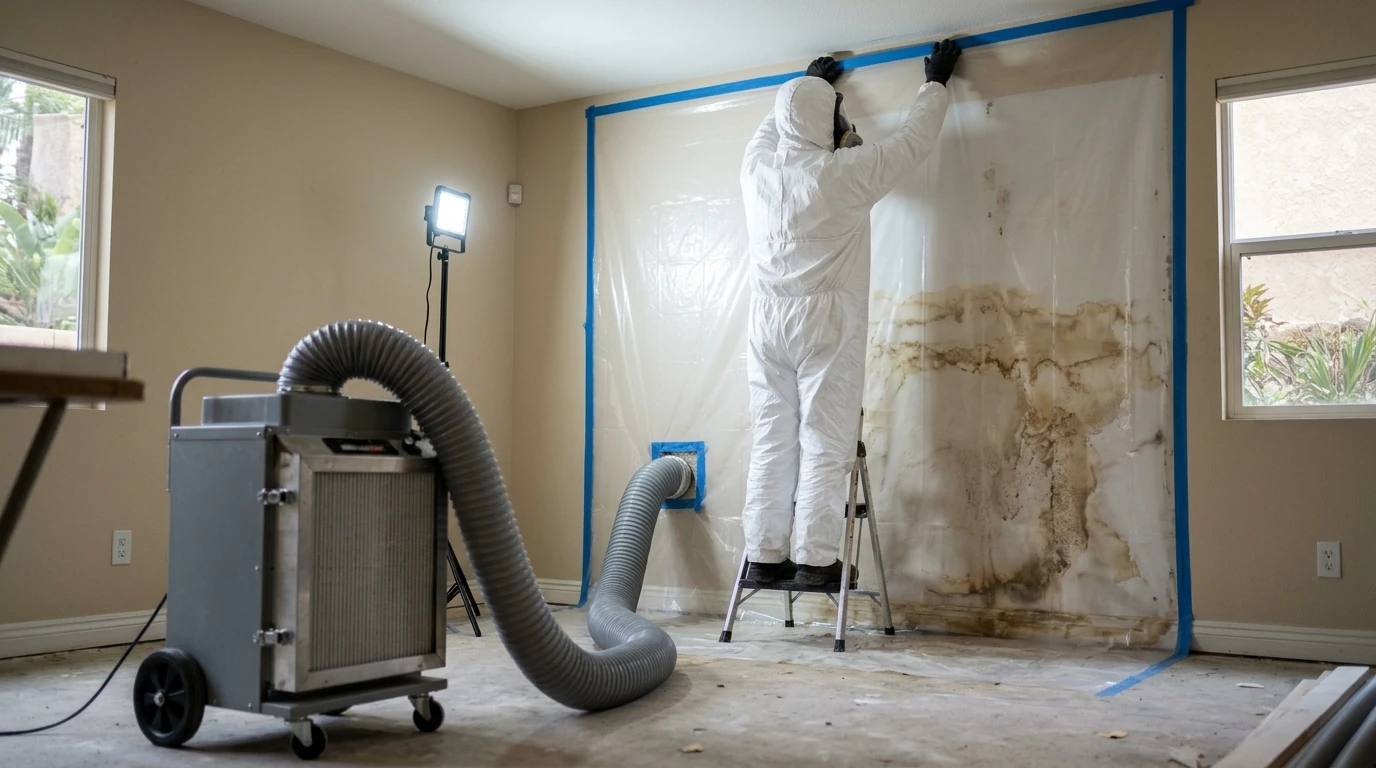
Containment adds cost too. Jobs that require negative-air containment, HEPA air scrubbers, and a sealed work zone (standard practice for anything beyond a small isolated spot) run higher than a simple wipe-down because the crew is setting up and tearing down engineering controls, not just cleaning a surface. If mold has gotten into HVAC ductwork, that’s a separate line item, since contaminated ducts need their own cleaning or replacement to keep spores from recirculating through the house.
The last factor is whether the moisture source has been fixed. Mold can begin growing within 24 to 48 hours on a wet material, so remediation that happens before the leak or roof problem is repaired is money spent twice. A slow plumbing leak or roof intrusion that keeps feeding moisture back into the wall will undo the work.
Will Homeowners Insurance Cover Mold Remediation in CA?
Usually only if the mold grew from a sudden, covered water loss, like a burst supply line, not from a slow leak or long-term moisture problem. Most standard California homeowners policies treat mold as a result of poor maintenance unless it’s directly tied to a covered peril, and many policies cap mold-related payouts even when they do apply.
In practice, that means a pipe that burst overnight and caused mold within a day or two has a real shot at coverage. A slow leak under a sink that nobody noticed for six months typically does not, because insurers treat gradual seepage and deferred maintenance as the homeowner’s responsibility. The Insurance Information Institute’s guide to what’s covered under a standard policy walks through this distinction in more detail, and it’s worth reading before you file a claim.
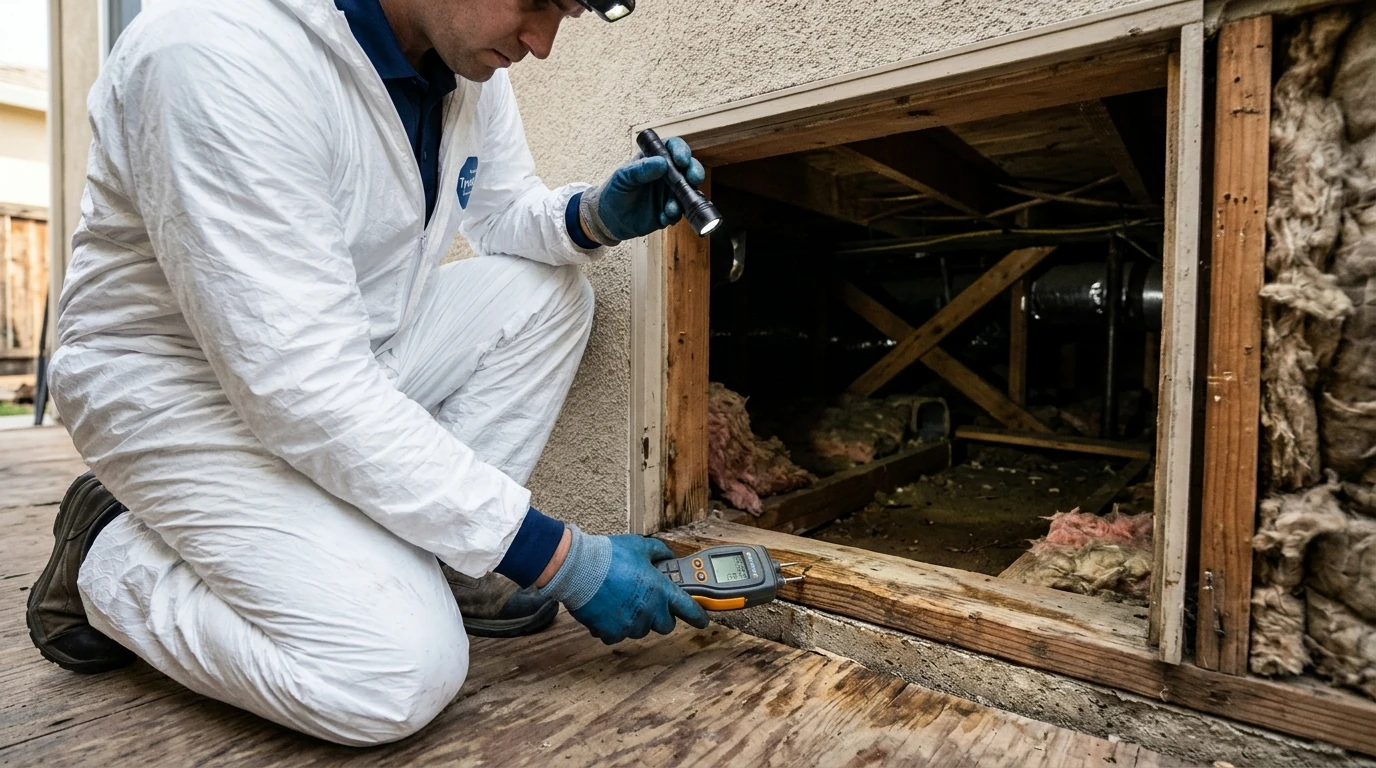
Documentation is what protects a claim either way. Photograph the source of the water, keep the moisture meter readings from the inspection, and get a written scope of work before remediation starts. HHI Restoration provides that documentation as part of every job, which matters whether the adjuster approves full coverage, partial coverage, or none at all.
What Happens During a Professional Mold Remediation Job?
A remediation job follows roughly the same five steps regardless of size: inspection, containment, removal, cleaning, and clearance testing. Knowing the sequence helps you understand what you’re actually paying for at each stage.
- Inspection and moisture mapping. A technician identifies the source, measures the affected area, and often pulls a sample for lab testing to confirm species and extent.
- Containment setup. Plastic sheeting and negative-air machines isolate the work area so spores don’t spread to clean parts of the home during demolition.
- Material removal. Porous materials (drywall, insulation, carpet) that can’t be cleaned are bagged and removed under containment, following EPA guidance for safe mold cleanup in homes.
- HEPA cleaning and antimicrobial treatment. Remaining surfaces get HEPA-vacuumed and treated to address residual spores on framing and subfloor.
- Clearance testing and reconstruction. A post-remediation verification confirms spore counts are back to normal before any drywall, flooring, or trim goes back in, which is where general contracting picks up.
This is also why a mold inspection alone (that first $300 to $600 line item) is worth doing before you commit to full remediation. DIY test kits miss a lot of what’s actually driving growth behind a wall, and a proper inspection tells you whether you’re looking at a $600 job or an $8,000 one before any demolition happens.
When Should You Call a Mold Remediation Company in Orange, CA?
Call as soon as you see visible growth larger than about a square foot, smell a persistent musty odor, or get a positive reading on a moisture meter near a wall or floor that shouldn’t be damp. Waiting rarely saves money, because untreated mold keeps spreading and the remediation scope only grows.
HHI Restoration has worked on homes throughout Orange, from older stucco bungalows near Santiago Creek to newer builds further out toward Villa Park and North Tustin, where crawlspace humidity and aging plumbing are common culprits behind hidden growth. An inspection gets you a real scope and a real number, not a guess over the phone.
Call HHI Restoration at (714) 209-7719 to schedule a mold inspection, or request a written remediation estimate through their mold remediation service page.
About HHI Restoration
HHI Restoration is an IICRC Certified Firm serving Orange, CA and the surrounding Orange County communities since 2004, holding California contractor license #960721. Their technicians carry IICRC AMRT mold remediation and water restoration certifications and operate 24/7. This guide was prepared with the HHI Restoration team by Robert Hartley, drawing on the company’s mold, water damage, and reconstruction work across Orange County.
Video Transcript
Found mold behind a baseboard in your Orange County home? Before you panic, let’s talk about what remediation actually costs in California. Costs typically range from four hundred fifty dollars to fifteen thousand or more, depending on size, spread, and whether moisture is still active. A small bathroom spot might run under fifteen hundred dollars, while a single room with hidden growth often costs between fifteen hundred and five thousand. Larger jobs covering crawlspaces, attics, or multiple rooms typically land between five thousand and eight thousand dollars. Severe structural remediation, with full containment and framing replacement, can reach eight thousand to fifteen thousand dollars or more. Five factors drive price: square footage, containment complexity, material removal, the moisture source, and whether HVAC ductwork is affected. Mold can start growing within just one to two days on wet material, so fixing the leak first saves you from paying twice. Insurance usually helps when mold follows a sudden event, like a burst pipe, but slow leaks are often treated differently by insurers. Photos, moisture readings, and a written scope of work all help support your claim, whatever the outcome. A professional follows five steps: inspect, contain, remove, clean, and verify with clearance testing. Call HHI Restoration at (714) 209-7719 to schedule an assessment.