TL;DR: Fire and smoke restoration is the process of stabilizing a damaged structure, removing soot and odor, and repairing what the fire destroyed. It typically starts with board-up and water extraction (from firefighting efforts), moves into soot and debris removal, then odor treatment with HEPA air scrubbers or thermal fogging, and finishes with reconstruction. Most standard homeowners policies cover fire damage as a named peril, including the resulting smoke and soot. Timelines range from a few days for a contained kitchen fire to several months for a structural loss.
If a grease fire just went out in your Orange kitchen, or the fire department just cleared your property after a bedroom fire, you’re probably standing in a house that smells like a campfire and looks a lot worse than the flames alone would suggest. Soot travels through HVAC ducts into rooms the fire never touched. Water from the hoses is now soaking into drywall and subfloor. The smell gets into fabric, grout, and even hard surfaces. None of that goes away by opening windows and running a fan, and the longer it sits, the more it costs to fix.
What Does Fire and Smoke Restoration Actually Include?
Fire and smoke restoration covers everything between “the fire is out” and “the house is livable again,” including emergency stabilization, cleaning, odor removal, and rebuilding damaged materials.
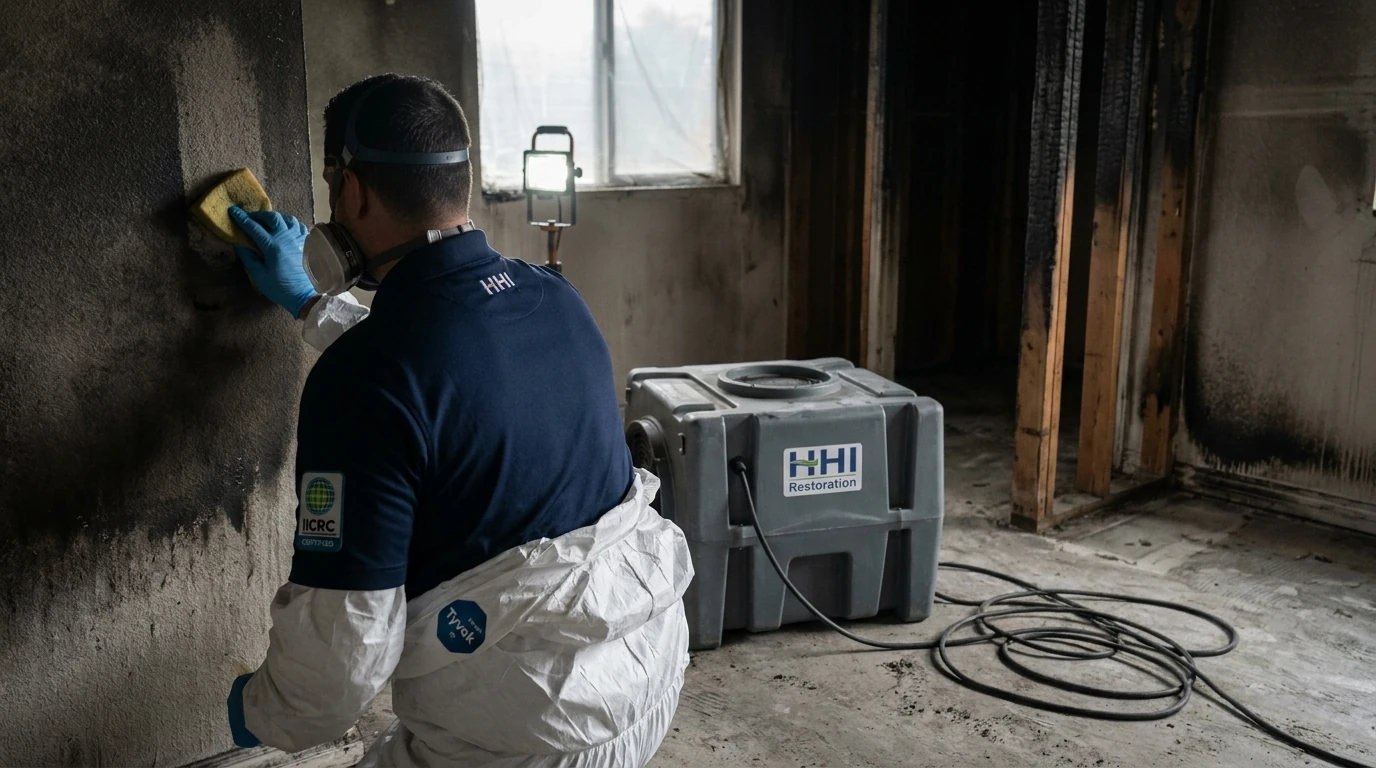
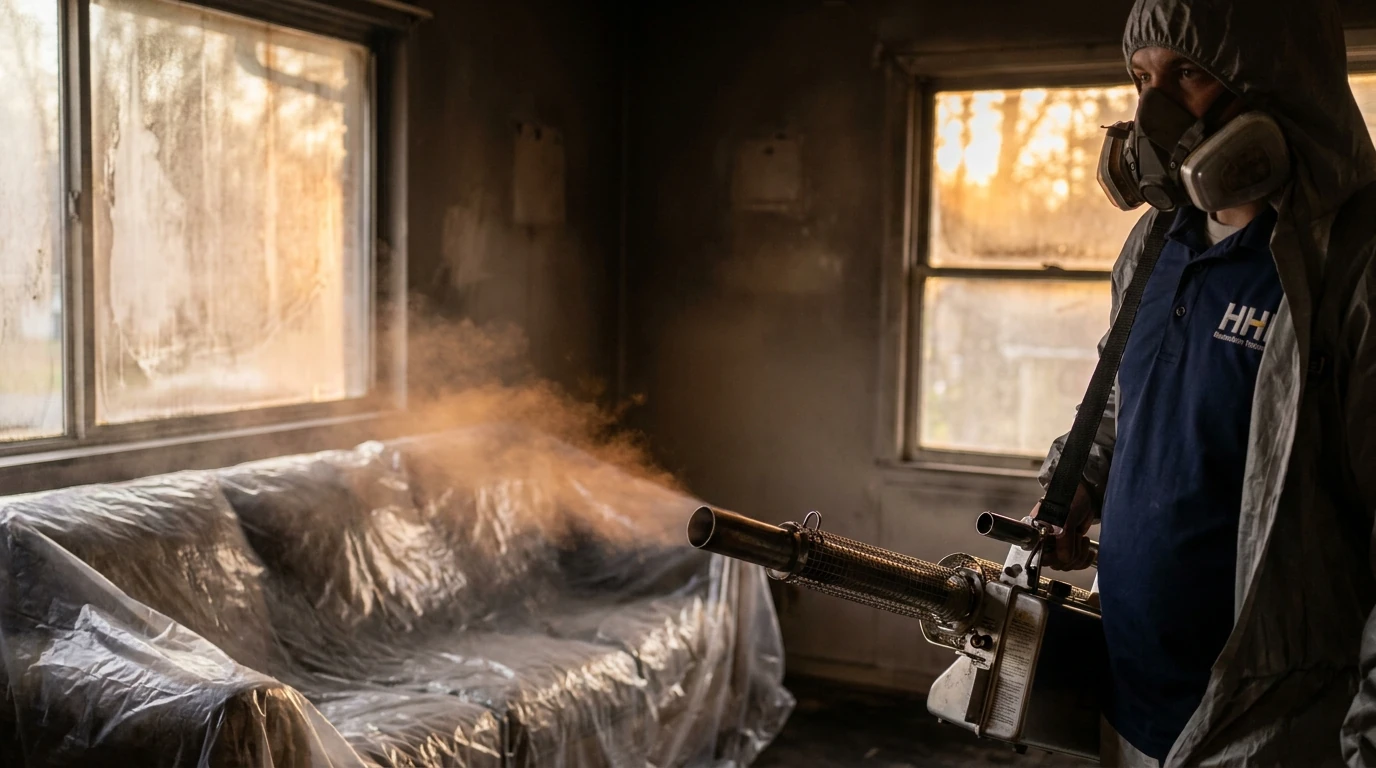
The work typically breaks into four phases. First is emergency mitigation: boarding up broken windows or a damaged roof, tarping exposed areas, and extracting standing water left by firefighting efforts. Second is content and structure cleaning: removing soot from walls, ceilings, and belongings, and discarding materials too damaged to save. Third is odor treatment, usually HEPA air scrubbing, thermal fogging, or ozone treatment in unoccupied spaces, since soot particles and smoke residue hold odor long after visible soot is gone. Fourth is reconstruction: drywall, flooring, paint, cabinetry, whatever the fire or the firefighting response destroyed.
Smoke damage alone, without visible flame damage, still requires most of these steps. A fire two rooms away can leave a fine soot film on every surface in the house, carried through the duct system. That residue is acidic and keeps etching glass, metal, and finishes if it’s not cleaned within the first few days.
How Long Does Fire and Smoke Restoration Take?
A contained fire limited to one room, like a stovetop fire, usually takes one to three weeks from board-up to move-back-in. A structural fire that burns through framing, roofing, or multiple rooms can take two to six months once reconstruction is included.
The timeline depends less on the fire itself and more on what happens after. Smoke and soot removal from an entire home’s HVAC system, drywall, and belongings can take several days on its own. Odor treatment sometimes needs a second pass if the first round doesn’t fully neutralize it, especially in homes with natural materials like wood cabinetry or hardwood flooring that absorb smoke deeply. Reconstruction timing depends on permitting through the City of Orange, material lead times, and whether the rebuild matches existing finishes in an older home near Old Towne Orange versus a newer build near Santiago Canyon.
Drying follows the ANSI/IICRC S700 Standard for Professional Fire and Smoke Damage Restoration, which sets the benchmarks for soot removal, deodorization, and structural drying after firefighting water intrusion. Our related post on the fire damage restoration process walks through each phase in more detail.
Will Insurance Cover Fire and Smoke Restoration?
Most standard homeowners policies cover fire damage, including the smoke and soot it causes, because fire is a named peril on nearly every HO-3 policy. That typically includes mitigation, cleaning, and rebuilding costs up to your coverage limits.
What gets disputed is usually scope, not whether the claim is covered at all. Adjusters sometimes propose cleaning soot-damaged materials that a restoration contractor would recommend replacing, particularly porous materials like carpet padding, insulation, or drywall that absorbed smoke deep into the material. A written scope of work and photo documentation from the start protects your position if the adjuster’s estimate comes in short. Review the Insurance Information Institute’s guide on which disasters are covered by homeowners insurance for the general coverage pattern, and always confirm specifics against your own policy.
Smoke damage with no flame contact, like a neighboring unit fire in a condo or a garage fire that didn’t spread into the main house, is still typically a covered loss if the fire itself was covered. Document odor and soot evidence in every room, not just the room where the fire occurred, since reimbursement often depends on proving the extent of the damage.
What Should You Look for When Hiring a Fire and Smoke Restoration Company in Orange?
Look for a company that’s IICRC certified in fire and smoke restoration, provides a written scope before work starts, and handles the insurance documentation directly rather than leaving that to you.
Fire and smoke work spans multiple trades: emergency board-up, hazardous material handling if the home has older lead paint or asbestos materials common in pre-1980s Orange housing stock, soot and odor remediation, and full reconstruction. A company that only does one piece of that chain means you’re coordinating multiple vendors during an already stressful recovery. Ask specifically what equipment they use for odor treatment (thermal fogging and HEPA air scrubbing are standard, ozone treatment only in unoccupied spaces), and ask to see their IICRC Certified Firm status directly rather than taking it on faith.
HHI Restoration is an IICRC Certified Firm holding the IICRC FSRT (Fire & Smoke Restoration Technician) credential, and operates 24/7 across Orange, Anaheim, Santa Ana, Tustin, and the surrounding area. Scheduling a damage assessment early, even before the insurance claim is finalized, keeps soot and odor from setting further into materials while the paperwork moves.
Fire and smoke damage rarely stays contained to the room where it started, and the gap between “looks fine” and “actually clean” is usually invisible until months later when the odor comes back in humid weather. A documented scope and a crew that handles both the cleaning and the rebuild closes that gap in one process instead of several.
About HHI Restoration
HHI Restoration is an IICRC Certified Firm serving Orange, CA and the surrounding Orange County area since 2004, holding California contractor license #960721. Their technicians carry IICRC credentials in fire and smoke restoration (FSRT), water damage (WRT), structural drying (ASD), and mold remediation (AMRT), along with EPA Lead-Safe certification. HHI handles fire damage restoration, smoke damage restoration, water damage, mold remediation, sewage cleanup, storm damage, asbestos and lead paint abatement, and reconstruction across Orange County, operating 24/7.
Need help now? Call HHI Restoration at (714) 209-7719.